Elabscience
SKU:E-AB-62522
TEFM Polyclonal Antibody
TEFM Polyclonal Antibody
Couldn't load pickup availability
TEFM Polyclonal Antibody
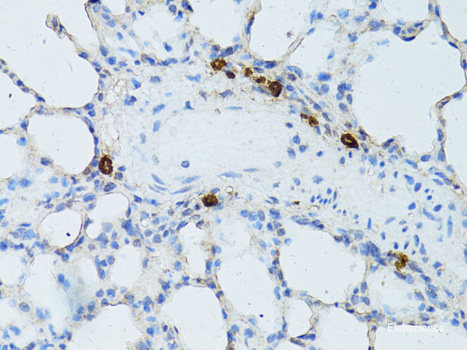
The TEFM Polyclonal Antibody is a highly specific and reliable tool designed for the detection and analysis of the Transcription Elongation Factor M (TEFM) protein. This antibody has been meticulously developed using advanced techniques to ensure exceptional sensitivity and accuracy in various applications, including Western blotting, immunohistochemistry, and immunofluorescence.
With its exceptional affinity and specificity, the TEFM Polyclonal Antibody enables researchers to explore the intricate mechanisms underlying transcription elongation processes. It recognizes the TEFM protein with high precision, facilitating the investigation of its expression levels, localization, and interactions within cellular contexts.
This antibody exhibits outstanding performance across a wide range of species, making it an ideal choice for diverse experimental settings. Its robustness and reliability guarantee consistent and reproducible results, empowering researchers to confidently delve into the functional roles of TEFM in various biological systems.
The TEFM Polyclonal Antibody is manufactured under stringent quality control measures, ensuring batch-to-batch consistency and minimizing any potential variability. Its exceptional sensitivity allows for the detection of even low-abundance TEFM protein, enabling researchers to uncover subtle changes in expression levels and dynamics.
In summary, the TEFM Polyclonal Antibody is a cutting-edge research tool that offers unparalleled specificity, sensitivity, and reliability. Its exceptional performance in various applications makes it an indispensable asset for scientists aiming to unravel the intricate mechanisms of transcription elongation processes and explore the functional significance of TEFM in diverse biological contexts.
Share