Elabscience
SKU:E-AB-62945
TNFAIP6 Polyclonal Antibody
TNFAIP6 Polyclonal Antibody
Couldn't load pickup availability
TNFAIP6 Polyclonal Antibody
The TNFAIP6 Polyclonal Antibody is a highly specific and sensitive tool designed for the detection and quantification of TNFAIP6 protein in various biological samples. This antibody is produced using advanced recombinant DNA technology, ensuring high purity and batch-to-batch consistency.
TNFAIP6, also known as tumor necrosis factor alpha-induced protein 6, is a secreted glycoprotein that plays a crucial role in various physiological and pathological processes. It is involved in the regulation of inflammation, tissue remodeling, and cell proliferation. Dysregulation of TNFAIP6 has been implicated in several diseases, including cancer, cardiovascular disorders, and autoimmune conditions.
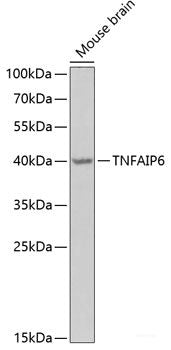
The TNFAIP6 Polyclonal Antibody exhibits exceptional specificity towards TNFAIP6 protein, enabling accurate and reliable detection in complex biological matrices. It has been extensively validated for various applications, including Western blotting, immunohistochemistry, and enzyme-linked immunosorbent assay (ELISA).
This antibody offers numerous advantages, including high sensitivity, low background noise, and excellent reproducibility. It is compatible with a wide range of sample types, including cell lysates, tissue homogenates, and biological fluids. The TNFAIP6 Polyclonal Antibody is supplied as a ready-to-use solution, eliminating the need for time-consuming and error-prone antibody preparation.
With its exceptional performance characteristics and broad application potential, the TNFAIP6 Polyclonal Antibody is an indispensable tool for researchers and clinicians studying the role of TNFAIP6 in various disease processes. Its reliable and accurate results will contribute to a deeper understanding of TNFAIP6 biology and facilitate the development of novel therapeutic strategies targeting this protein.
Share