Elabscience
SKU:E-AB-61134
KAT7 Polyclonal Antibody
KAT7 Polyclonal Antibody
Couldn't load pickup availability
KAT7 Polyclonal Antibody
The KAT7 Polyclonal Antibody is a highly specific and sensitive antibody that has been designed to detect and quantify the expression of KAT7 protein in various biological samples. This antibody is produced by immunizing rabbits with a synthetic peptide corresponding to the N-terminal region of human KAT7 protein. The resulting polyclonal antibody has been purified using a combination of protein A and protein G affinity chromatography to ensure high specificity and purity.
The KAT7 protein is a histone acetyltransferase that plays a critical role in regulating gene expression and chromatin remodeling. It has been implicated in a variety of cellular processes, including cell cycle progression, DNA damage response, and apoptosis. The KAT7 Polyclonal Antibody is therefore an essential tool for researchers studying these processes and their underlying mechanisms.
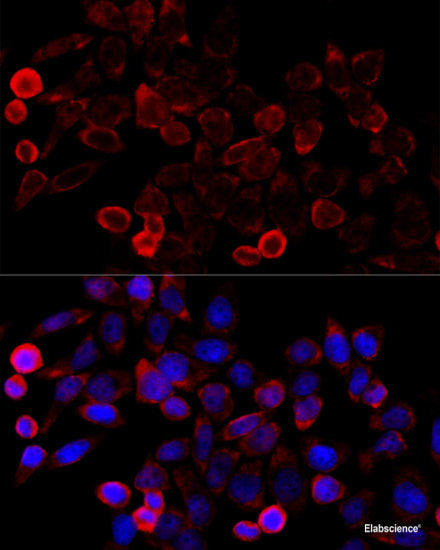
The KAT7 Polyclonal Antibody has been extensively validated for use in a variety of applications, including Western blotting, immunohistochemistry, and immunofluorescence. It has been shown to specifically detect KAT7 protein in a variety of human and animal tissues, including liver, kidney, brain, and heart. The antibody has also been shown to be highly sensitive, with a detection limit of as low as 0.1 ng/mL.
In addition to its high specificity and sensitivity, the KAT7 Polyclonal Antibody is also highly reproducible, with consistent results across multiple experiments and batches. It is supplied in a convenient liquid format, with a concentration of 1 mg/mL, and can be easily stored at -20°C for long-term use.
Overall, the KAT7 Polyclonal Antibody is a highly reliable and effective tool for researchers studying the role of KAT7 protein in various biological processes. Its high specificity, sensitivity, and reproducibility make it an essential component of any research program focused on understanding the complex mechanisms underlying gene expression and chromatin remodeling.
Share