Elabscience
SKU:E-AB-61085
Caspase-2 Polyclonal Antibody
Caspase-2 Polyclonal Antibody
Couldn't load pickup availability
Caspase-2 Polyclonal Antibody
The CASPASE-2 Polyclonal Antibody is a highly specific and sensitive tool designed for the detection and quantification of CASPASE-2 protein in various biological samples. This antibody has been meticulously developed using advanced techniques to ensure exceptional performance and reliability.
CASPASE-2 is a crucial member of the caspase family, which plays a pivotal role in the regulation of apoptosis, or programmed cell death. It is involved in various cellular processes, including cell cycle regulation, DNA repair, and immune response. Dysregulation of CASPASE-2 has been implicated in numerous diseases, such as cancer, neurodegenerative disorders, and autoimmune diseases.
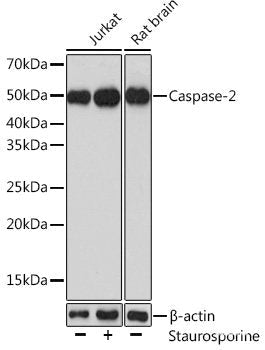
The CASPASE-2 Polyclonal Antibody exhibits high affinity and specificity towards CASPASE-2 protein, enabling accurate and precise detection. It has been extensively validated in a range of experimental settings, including Western blotting, immunohistochemistry, and immunofluorescence. This antibody demonstrates minimal cross-reactivity with other caspase family members, ensuring reliable and specific results.
This antibody is supplied as a liquid formulation, allowing for easy and convenient handling. It is provided in a ready-to-use format, eliminating the need for time-consuming and complex preparation steps. The CASPASE-2 Polyclonal Antibody is compatible with various sample types, including cell lysates, tissue homogenates, and biological fluids.
With its exceptional sensitivity and specificity, the CASPASE-2 Polyclonal Antibody is an invaluable tool for researchers and scientists studying apoptosis and its associated pathways. Its reliable performance and ease of use make it an ideal choice for a wide range of applications, including basic research, drug discovery, and diagnostic development.
Order the CASPASE-2 Polyclonal Antibody today and unlock new insights into the intricate mechanisms of apoptosis and its implications in disease progression.
Share