Elabscience
SKU:E-AB-52190
LAMTOR5 Polyclonal Antibody
LAMTOR5 Polyclonal Antibody
Couldn't load pickup availability
LAMTOR5 Polyclonal Antibody
The LAMTOR5 Polyclonal Antibody is a highly specific and reliable tool designed for the detection and analysis of LAMTOR5 protein expression in various biological samples. This antibody is produced using a rigorous and meticulous process, ensuring its exceptional quality and performance.
LAMTOR5, also known as p14, is a crucial component of the late endosomal/lysosomal adaptor and MAPK and MTOR activator complex (LAMTOR). This complex plays a pivotal role in the regulation of intracellular signaling pathways, including the MAPK and MTOR pathways, which are involved in cell growth, proliferation, and survival. Dysregulation of LAMTOR5 has been implicated in various diseases, including cancer, neurodegenerative disorders, and metabolic disorders.
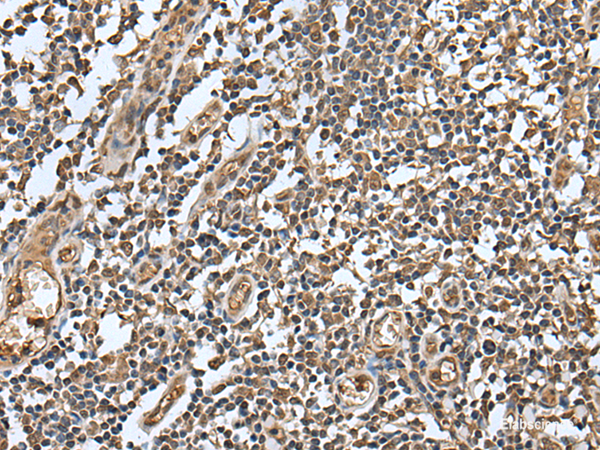
The LAMTOR5 Polyclonal Antibody exhibits high specificity and sensitivity, enabling accurate detection and quantification of LAMTOR5 protein levels in a wide range of sample types, including cell lysates, tissue homogenates, and biological fluids. This antibody has been extensively validated through various experimental techniques, including Western blotting, immunohistochemistry, and immunofluorescence, ensuring its reliability and reproducibility.
With its exceptional performance, the LAMTOR5 Polyclonal Antibody offers researchers a valuable tool for studying the role of LAMTOR5 in cellular processes and disease pathogenesis. Its versatility allows for a multitude of applications, including protein expression profiling, biomarker discovery, and therapeutic target identification. Furthermore, this antibody can be used in both basic research and clinical settings, facilitating translational studies and potential diagnostic applications.
In summary, the LAMTOR5 Polyclonal Antibody is a highly specific and reliable tool that enables accurate detection and analysis of LAMTOR5 protein expression. Its exceptional quality, versatility, and extensive validation make it an invaluable asset for researchers in various fields, contributing to advancements in our understanding of cellular processes and disease mechanisms.
Share