Elabscience
SKU:E-AB-20804
Phospho-AKT1 (Thr450) Polyclonal Antibody
Phospho-AKT1 (Thr450) Polyclonal Antibody
Couldn't load pickup availability
Phospho-AKT1 (Thr450) Polyclonal Antibody
The PHOSPHO-AKT1 (THR450) Polyclonal Antibody is a highly specific and sensitive tool designed for the detection and quantification of phosphorylated AKT1 at threonine 450 residue. This antibody is produced using advanced polyclonal antibody technology, ensuring high affinity and specificity towards the target protein.
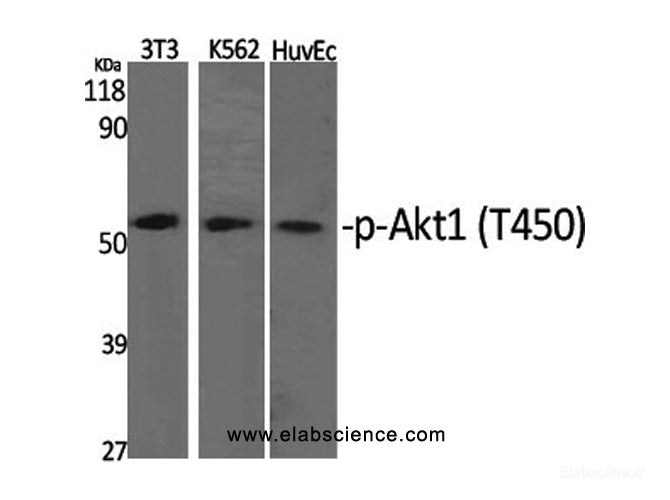
The PHOSPHO-AKT1 (THR450) Polyclonal Antibody is suitable for various applications, including Western blotting, immunohistochemistry, and immunofluorescence. It has been extensively validated for its performance in detecting phosphorylated AKT1 in a wide range of sample types, including cell lysates, tissue extracts, and biological fluids.
With its exceptional sensitivity and specificity, this antibody enables accurate and reliable quantification of phosphorylated AKT1, facilitating in-depth studies of AKT1 signaling pathways and its role in various cellular processes. Its versatility and robustness make it an indispensable tool for researchers in the fields of cancer biology, cell signaling, and drug discovery.
The PHOSPHO-AKT1 (THR450) Polyclonal Antibody is supplied in a convenient and ready-to-use format, ensuring ease of use and minimizing experimental variability. It is provided in a liquid formulation, allowing for direct application without the need for reconstitution or additional preparation steps.
In summary, the PHOSPHO-AKT1 (THR450) Polyclonal Antibody is a reliable and high-quality reagent that offers exceptional sensitivity and specificity for the detection and quantification of phosphorylated AKT1. Its broad range of applications and ease of use make it an invaluable tool for researchers seeking to unravel the complexities of AKT1 signaling pathways and its implications in various biological processes.
Share