Elabscience
SKU:E-AB-68106
Phospho-CFL1(S3) Polyclonal Antibody
Phospho-CFL1(S3) Polyclonal Antibody
Couldn't load pickup availability
Phospho-CFL1(S3) Polyclonal Antibody
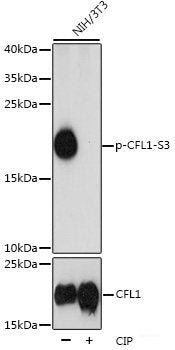
Introducing the PHOSPHO-CFL1(S3) Polyclonal Antibody, a cutting-edge scientific tool designed to facilitate advanced research in the field of cellular biology. This highly specialized antibody is meticulously crafted to target and detect phosphorylated Cofilin-1 (CFL1) at serine 3 (S3) residue, enabling precise investigation of cellular processes involving CFL1 phosphorylation.
The PHOSPHO-CFL1(S3) Polyclonal Antibody boasts exceptional specificity and sensitivity, ensuring accurate and reliable results in various experimental applications. Its polyclonal nature allows for enhanced recognition of the phosphorylated CFL1 at S3, enabling comprehensive analysis of cellular signaling pathways and protein interactions.
Crafted with utmost precision, this antibody undergoes rigorous quality control measures to guarantee optimal performance and reproducibility. Its superior affinity for phosphorylated CFL1 at S3 ensures minimal cross-reactivity, minimizing the risk of false-positive or false-negative results.
The PHOSPHO-CFL1(S3) Polyclonal Antibody is compatible with a wide range of techniques, including Western blotting, immunoprecipitation, immunofluorescence, and immunohistochemistry. Its versatility empowers researchers to explore diverse experimental approaches, facilitating a comprehensive understanding of CFL1 phosphorylation dynamics in various cellular contexts.
This antibody is supplied in a convenient and user-friendly format, ensuring ease of use and storage. With its long shelf life and stability, it guarantees consistent performance throughout the duration of your research project.
In summary, the PHOSPHO-CFL1(S3) Polyclonal Antibody is an indispensable tool for scientists and researchers seeking to unravel the intricate mechanisms underlying CFL1 phosphorylation. Its exceptional specificity, sensitivity, and compatibility with various techniques make it an invaluable asset in advancing our understanding of cellular biology.
Share