Elabscience
SKU:E-AB-19227
SGTA Polyclonal Antibody
SGTA Polyclonal Antibody
Couldn't load pickup availability
SGTA Polyclonal Antibody
The SGTA Polyclonal Antibody is a highly specific and reliable tool designed for the detection and analysis of SGTA protein expression in various biological samples. This antibody is produced using advanced immunization techniques, ensuring high affinity and sensitivity towards SGTA protein.
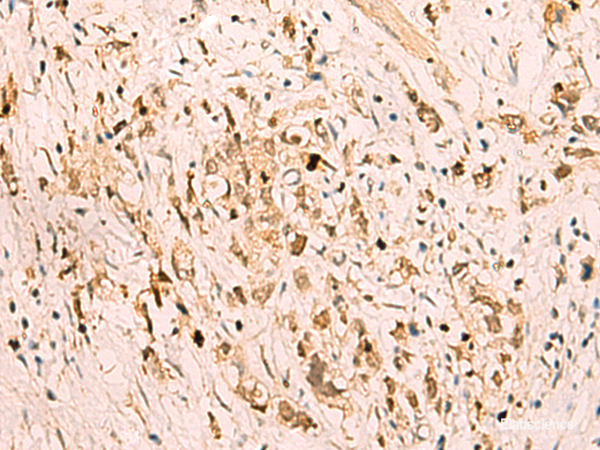
The SGTA Polyclonal Antibody exhibits exceptional performance in a wide range of applications, including Western blotting, immunohistochemistry, and immunofluorescence. It enables accurate and precise identification of SGTA protein in complex biological matrices, facilitating comprehensive research in diverse fields such as cell biology, molecular biology, and immunology.
With its superior specificity, the SGTA Polyclonal Antibody offers researchers the opportunity to explore the functional roles and regulatory mechanisms of SGTA protein in various cellular processes. Its robust performance guarantees reliable and reproducible results, enabling confident interpretation and analysis of experimental data.
This antibody is meticulously validated to ensure consistent performance and minimal cross-reactivity with other proteins, ensuring accurate and reliable results. It is manufactured under stringent quality control measures, guaranteeing batch-to-batch consistency and long-term stability.
The SGTA Polyclonal Antibody is supplied in a convenient and user-friendly format, allowing for easy handling and storage. It is provided in a liquid form, eliminating the need for reconstitution, and is compatible with a variety of commonly used buffers and diluents.
In summary, the SGTA Polyclonal Antibody is a highly specific and reliable tool that enables accurate detection and analysis of SGTA protein expression. Its exceptional performance, robustness, and compatibility with various applications make it an indispensable asset for researchers in their quest for a deeper understanding of SGTA protein's functional roles and regulatory mechanisms.
Share