Elabscience
SKU:E-AB-17810
CARD16 Polyclonal Antibody
CARD16 Polyclonal Antibody
Couldn't load pickup availability
CARD16 Polyclonal Antibody
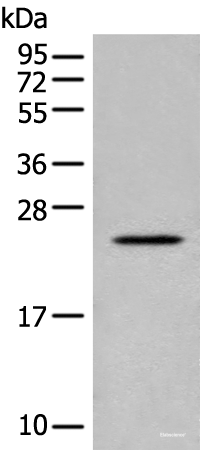
The CARD16 polyclonal antibody is a highly specific and sensitive immunological reagent designed for the detection and quantification of CARD16 protein in various biological samples. This antibody is produced by immunizing rabbits with a synthetic peptide corresponding to the C-terminal region of human CARD16 protein. The resulting polyclonal antibody exhibits high affinity and specificity towards the target protein, making it an ideal tool for various applications in research and diagnostics.
The CARD16 polyclonal antibody is purified using a combination of protein A and peptide affinity chromatography, ensuring high purity and minimal cross-reactivity with other proteins. This antibody is suitable for use in various immunoassays, including Western blotting, immunohistochemistry, and ELISA. It has been validated for use in human, mouse, and rat samples, making it a versatile tool for researchers working with different model organisms.
The CARD16 protein is a member of the caspase recruitment domain (CARD) family of proteins, which play important roles in regulating apoptosis and inflammation. Dysregulation of CARD16 has been implicated in various diseases, including cancer, autoimmune disorders, and cardiovascular diseases. The CARD16 polyclonal antibody can be used to study the expression and function of this protein in different biological contexts, providing valuable insights into its role in disease pathogenesis.
In summary, the CARD16 polyclonal antibody is a high-quality immunological reagent that offers excellent sensitivity and specificity for the detection and quantification of CARD16 protein. It is a valuable tool for researchers and clinicians working in various fields, including cancer biology, immunology, and cardiovascular research.
Share