Elabscience
SKU:E-AB-14787
BCL10 Polyclonal Antibody
BCL10 Polyclonal Antibody
Couldn't load pickup availability
BCL10 Polyclonal Antibody
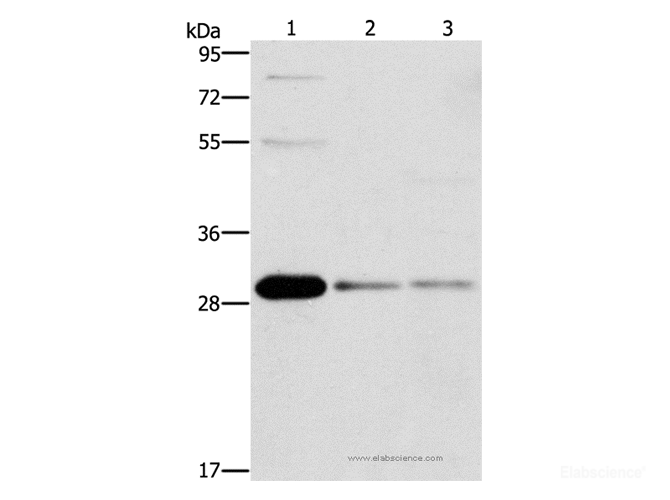
The BCL10 polyclonal antibody is a highly specific and sensitive tool for the detection and analysis of BCL10 protein expression in various biological samples. This antibody has been meticulously developed and rigorously validated to ensure optimal performance and reliability in a wide range of applications, including Western blotting, immunohistochemistry, and immunofluorescence.
The BCL10 polyclonal antibody exhibits exceptional affinity and selectivity towards the BCL10 protein, enabling accurate and precise quantification of its expression levels. With its superior sensitivity, this antibody allows for the detection of even low abundance BCL10 protein, facilitating comprehensive and detailed analysis of cellular signaling pathways and protein interactions.
This antibody is produced using state-of-the-art techniques, ensuring high purity and consistency in every batch. Its polyclonal nature enhances its versatility and robustness, enabling it to recognize multiple epitopes on the BCL10 protein, thereby increasing the chances of successful detection and minimizing the risk of false negatives.
The BCL10 polyclonal antibody is supplied in a convenient and user-friendly format, with various options available to suit different experimental requirements. It is provided as a liquid formulation, ready for immediate use, eliminating the need for time-consuming reconstitution. Additionally, it is available in different sizes, allowing for flexibility in experimental design and minimizing wastage.
In summary, the BCL10 polyclonal antibody is a reliable and efficient tool for the accurate detection and analysis of BCL10 protein expression. Its exceptional sensitivity, specificity, and versatility make it an invaluable asset for researchers in the fields of molecular biology, cell biology, and immunology, enabling them to unravel the intricate mechanisms underlying cellular processes and disease pathogenesis.
Share