Elabscience
SKU:E-AB-14367
SFTPD Polyclonal Antibody
SFTPD Polyclonal Antibody
Couldn't load pickup availability
SFTPD Polyclonal Antibody
The SFTPD Polyclonal Antibody is a highly specific and sensitive tool designed for the detection and quantification of the surfactant protein D (SFTPD) in various biological samples. This antibody is produced by immunizing rabbits with a synthetic peptide corresponding to a specific region of the SFTPD protein.
Surfactant protein D is a crucial component of the innate immune system, playing a vital role in host defense against respiratory pathogens. It is primarily expressed in the lung, where it acts as a pattern recognition receptor, binding to various microorganisms and initiating immune responses.
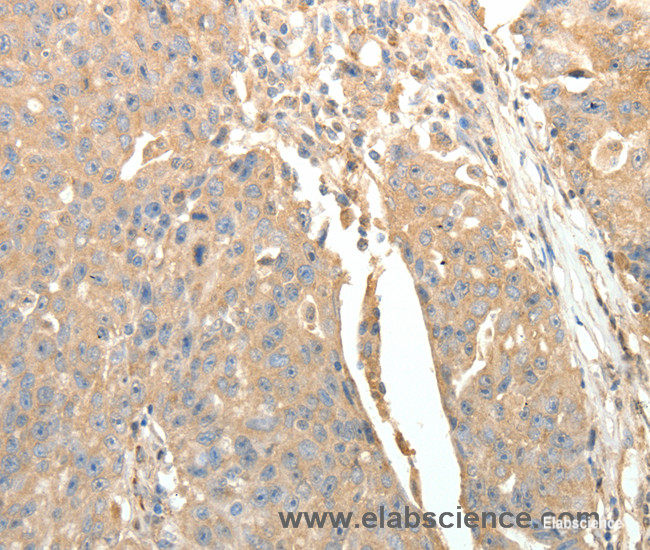
The SFTPD Polyclonal Antibody exhibits exceptional affinity and selectivity towards SFTPD, enabling accurate and reliable detection of this protein in complex biological matrices. It has been extensively validated for use in various applications, including Western blotting, immunohistochemistry, and enzyme-linked immunosorbent assays (ELISA).
With its high sensitivity and specificity, this antibody offers researchers a valuable tool for studying the role of SFTPD in respiratory diseases, such as pneumonia, asthma, and chronic obstructive pulmonary disease (COPD). It can also aid in the development of diagnostic tests and therapeutic interventions targeting SFTPD-related disorders.
The SFTPD Polyclonal Antibody is supplied as a liquid formulation, ready for immediate use. It is provided in a convenient size and quantity, ensuring cost-effectiveness and minimizing wastage. Each batch of antibody undergoes rigorous quality control procedures to ensure consistent performance and reproducibility.
In summary, the SFTPD Polyclonal Antibody is a reliable and efficient tool for the detection and quantification of surfactant protein D. Its exceptional sensitivity, specificity, and versatility make it an indispensable asset for researchers and clinicians working in the field of respiratory biology and immunology.
Share