Elabscience
SKU:E-AB-13719
TAF10 Polyclonal Antibody
TAF10 Polyclonal Antibody
Couldn't load pickup availability
TAF10 Polyclonal Antibody
The TAF10 Polyclonal Antibody is a highly specific and sensitive immunological tool designed for the detection and quantification of TAF10 protein in various biological samples. This antibody is produced by immunizing rabbits with a synthetic peptide corresponding to a region within the N-terminal domain of the TAF10 protein.
TAF10, also known as TATA-box binding protein-associated factor 10, is an essential component of the general transcription factor complex TFIID. It plays a crucial role in the initiation of transcription by binding to the TATA box of gene promoters and recruiting other transcription factors. TAF10 is involved in the regulation of gene expression and is required for the transcription of a wide range of genes involved in various cellular processes.
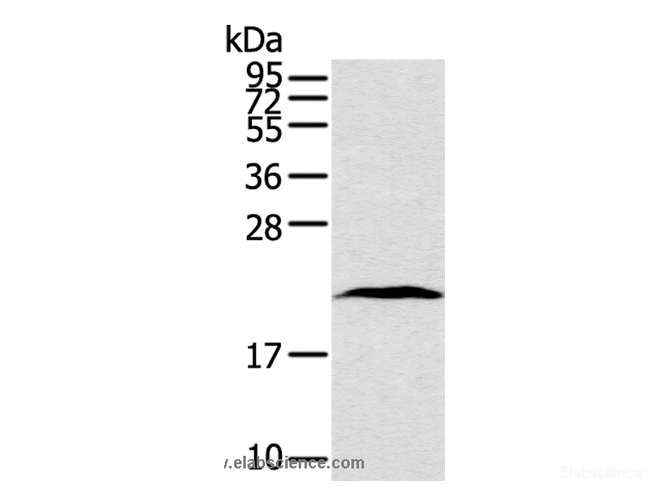
The TAF10 Polyclonal Antibody has been extensively validated for its specificity and sensitivity in various experimental techniques, including Western blotting, immunohistochemistry, and immunofluorescence. It exhibits minimal cross-reactivity with other related proteins, ensuring accurate and reliable results.
This antibody is supplied as a liquid formulation in a convenient size of 100 μg, allowing for multiple experiments. It is provided in a ready-to-use format, eliminating the need for additional preparation steps. The TAF10 Polyclonal Antibody is suitable for use in both research and diagnostic applications, enabling the investigation of TAF10 protein expression and its functional role in various biological systems.
In summary, the TAF10 Polyclonal Antibody is a highly specific and sensitive tool for the detection and quantification of TAF10 protein. Its reliable performance and versatility make it an ideal choice for researchers and clinicians studying gene expression and transcriptional regulation.
Share