Elabscience
SKU:E-AB-13237
FAT1 Polyclonal Antibody
FAT1 Polyclonal Antibody
Couldn't load pickup availability
FAT1 Polyclonal Antibody
The FAT1 Polyclonal Antibody is a highly specific and reliable tool for the detection and analysis of FAT1 protein expression in various biological samples. This antibody has been meticulously developed and rigorously validated to ensure optimal performance and accuracy in immunohistochemistry (IHC), western blotting (WB), and other relevant applications.
The FAT1 protein, encoded by the FAT1 gene, plays a crucial role in cell adhesion and migration, as well as in the regulation of tissue development and homeostasis. Dysregulation of FAT1 expression has been implicated in various pathological conditions, including cancer progression and metastasis. Therefore, the FAT1 Polyclonal Antibody serves as an invaluable resource for researchers and clinicians aiming to investigate the functional significance of FAT1 in disease processes.
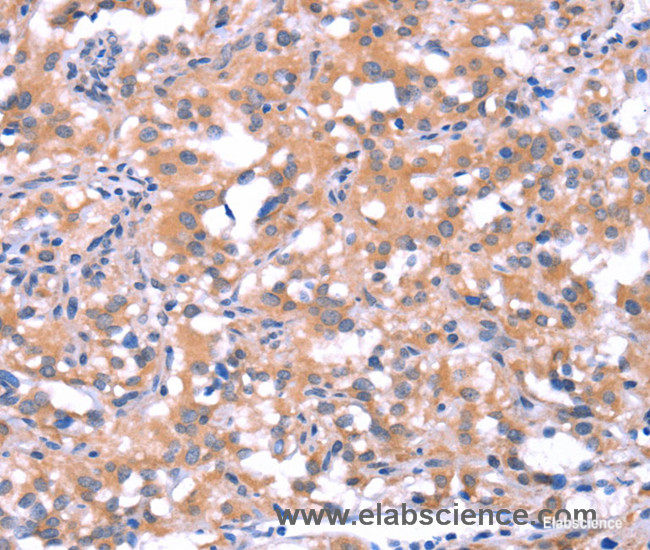
This antibody exhibits exceptional sensitivity and specificity, enabling the precise localization and quantification of FAT1 protein expression in both normal and diseased tissues. Its polyclonal nature ensures recognition of multiple epitopes, enhancing the reliability of results and minimizing the risk of false negatives. Furthermore, the antibody has been extensively tested on a wide range of tissue types, ensuring its versatility and applicability across various experimental settings.
The FAT1 Polyclonal Antibody is supplied as a ready-to-use solution, eliminating the need for time-consuming and error-prone antibody preparation. Its formulation has been optimized to provide consistent and reproducible results, facilitating efficient and accurate data interpretation. Additionally, the antibody exhibits excellent stability, allowing for long-term storage without compromising its performance.
In summary, the FAT1 Polyclonal Antibody is a highly reliable and specific tool for the detection and analysis of FAT1 protein expression. Its exceptional sensitivity, versatility, and ease of use make it an indispensable asset for researchers and clinicians investigating the functional role of FAT1 in various biological processes and disease states.
Share