Elabscience
SKU:E-AB-10150
KRT40 Polyclonal Antibody
KRT40 Polyclonal Antibody
Couldn't load pickup availability
KRT40 Polyclonal Antibody
The KRT40 Polyclonal Antibody is a highly specific and sensitive tool designed for the detection and analysis of KRT40 protein expression in various biological samples. This antibody is produced by immunizing rabbits with a synthetic peptide corresponding to a region within the C-terminal domain of the human KRT40 protein.
KRT40, also known as Keratin 40, is a member of the keratin family of proteins, which are the major structural components of epithelial cells. These proteins play a crucial role in maintaining the integrity and mechanical strength of epithelial tissues. KRT40 is predominantly expressed in the hair follicles, specifically in the inner root sheath and the medulla. It is involved in the formation and maintenance of the hair shaft, and its expression is tightly regulated during the hair growth cycle.
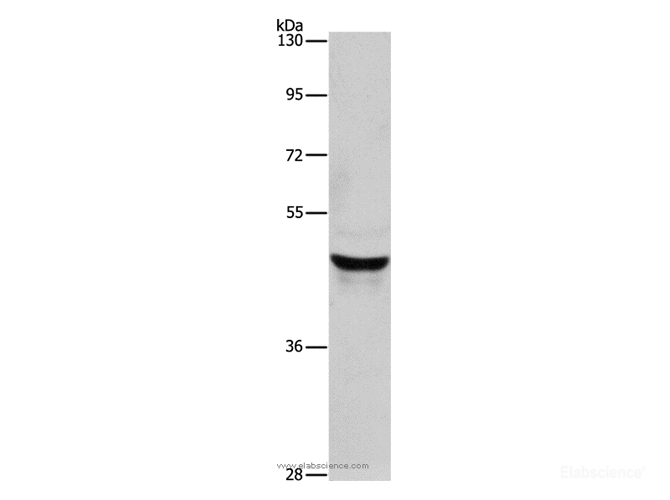
The KRT40 Polyclonal Antibody has been extensively validated for its specificity and sensitivity in various experimental techniques, including Western blotting, immunohistochemistry, and immunofluorescence. It exhibits minimal cross-reactivity with other keratin family members, ensuring accurate and reliable results. This antibody recognizes both the endogenous and recombinant forms of the KRT40 protein, making it suitable for a wide range of applications.
With its high affinity and excellent performance, the KRT40 Polyclonal Antibody is an indispensable tool for researchers studying the role of KRT40 in hair biology, epithelial cell differentiation, and related fields. Its use in various research applications will contribute to a better understanding of the molecular mechanisms underlying hair growth and development, as well as potential therapeutic targets for hair disorders.
In summary, the KRT40 Polyclonal Antibody offers exceptional specificity, sensitivity, and versatility, making it an ideal choice for researchers seeking to investigate the expression and function of KRT40 protein in diverse biological contexts.
Share