1
/
of
1
Elabscience
SKU:E-EL-H1968
Human POT1(Protection of Telomeres Protein 1) ELISA Kit
Human POT1(Protection of Telomeres Protein 1) ELISA Kit
Regular price
$609.00 USD
Regular price
Sale price
$609.00 USD
Unit price
/
per
Shipping calculated at checkout.
Couldn't load pickup availability
The Human POT1 (Protection of Telomeres Protein 1) ELISA Kit is a highly sensitive and specific assay designed to measure the levels of POT1 protein in human serum, plasma, and cell lysates. POT1 is a key component of the shelterin complex, which plays a critical role in protecting telomeres from degradation and maintaining genomic stability. Dysregulation of POT1 expression has been implicated in a variety of human diseases, including cancer, aging, and telomere syndromes. Therefore, accurate measurement of POT1 levels is essential for understanding the underlying mechanisms of these diseases and developing effective therapeutic strategies.
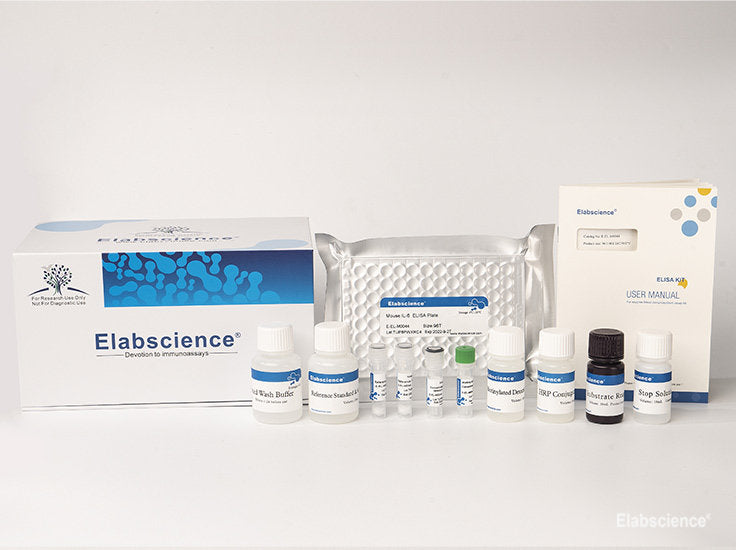
The Human POT1 ELISA Kit utilizes a sandwich enzyme-linked immunosorbent assay (ELISA) format, which allows for the detection of POT1 protein with high sensitivity and specificity. The kit includes all necessary reagents and protocols for the quantitative measurement of POT1 levels in human samples. The assay is based on the principle of a sandwich ELISA, in which a capture antibody specific to POT1 is coated onto a microplate, and a detection antibody labeled with horseradish peroxidase (HRP) is used to detect the captured POT1 protein. The intensity of the color produced by the HRP substrate is proportional to the amount of POT1 protein present in the sample.
The Human POT1 ELISA Kit has several advantages over other methods for measuring POT1 levels, including its high sensitivity, specificity, and reproducibility. The assay is easy to perform and can be completed in less than 4 hours. The kit has been validated for use with a variety of human sample types, including serum, plasma, and cell lysates. The results obtained with the Human POT1 ELISA Kit can be used to monitor changes in POT1 expression levels in response to various treatments or disease states, and to identify potential biomarkers for disease diagnosis and prognosis.
The Human POT1 ELISA Kit utilizes a sandwich enzyme-linked immunosorbent assay (ELISA) format, which allows for the detection of POT1 protein with high sensitivity and specificity. The kit includes all necessary reagents and protocols for the quantitative measurement of POT1 levels in human samples. The assay is based on the principle of a sandwich ELISA, in which a capture antibody specific to POT1 is coated onto a microplate, and a detection antibody labeled with horseradish peroxidase (HRP) is used to detect the captured POT1 protein. The intensity of the color produced by the HRP substrate is proportional to the amount of POT1 protein present in the sample.
The Human POT1 ELISA Kit has several advantages over other methods for measuring POT1 levels, including its high sensitivity, specificity, and reproducibility. The assay is easy to perform and can be completed in less than 4 hours. The kit has been validated for use with a variety of human sample types, including serum, plasma, and cell lysates. The results obtained with the Human POT1 ELISA Kit can be used to monitor changes in POT1 expression levels in response to various treatments or disease states, and to identify potential biomarkers for disease diagnosis and prognosis.
Share