Elabscience
SKU:E-EL-H2456
Human LCAT(Lecithin-Cholesterol Acyltransferase) ELISA Kit
Human LCAT(Lecithin-Cholesterol Acyltransferase) ELISA Kit
Couldn't load pickup availability
The HUMAN LCAT (Lecithin-Cholesterol Acyltransferase) ELISA Kit is a highly reliable and efficient tool designed for the quantitative measurement of LCAT levels in human serum or plasma samples. LCAT is an essential enzyme involved in the metabolism of cholesterol, playing a crucial role in the reverse cholesterol transport pathway. This ELISA kit utilizes a sandwich enzyme immunoassay technique, ensuring accurate and precise results.
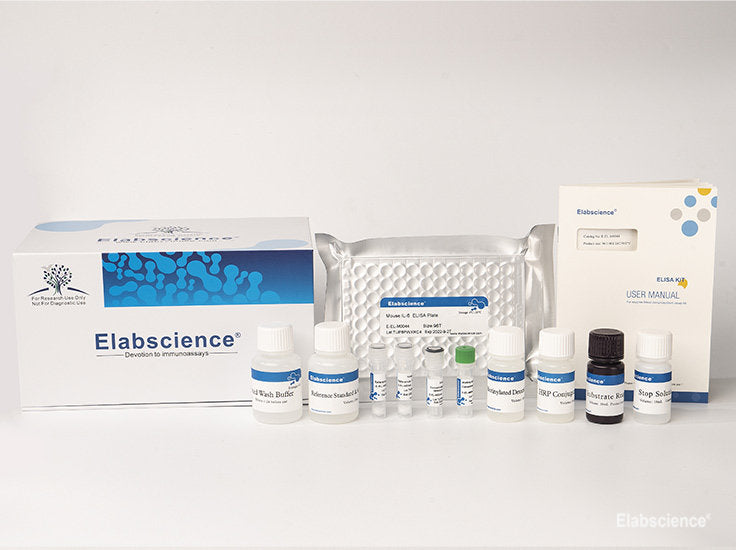
This ELISA kit offers a wide dynamic range, allowing for the detection of LCAT levels from as low as 0.156 ng/mL to as high as 10 ng/mL. The assay is highly sensitive, with a minimum detectable dose of 0.039 ng/mL. The kit includes all the necessary components, including pre-coated microplates, standards, controls, and reagents, ensuring convenience and ease of use. The assay procedure is straightforward, with a total assay time of approximately 3 hours, making it suitable for high-throughput applications.
The HUMAN LCAT ELISA Kit demonstrates excellent specificity, with minimal cross-reactivity with other related proteins. It exhibits high precision, with intra-assay and inter-assay coefficients of variation less than 10%. The kit has been extensively validated, ensuring accurate and reliable results. It is suitable for research purposes, aiding in the investigation of LCAT's role in cholesterol metabolism and its potential implications in various diseases, such as atherosclerosis and cardiovascular disorders.
In summary, the HUMAN LCAT ELISA Kit is a comprehensive and efficient tool for the quantitative measurement of LCAT levels in human serum or plasma samples. With its high sensitivity, wide dynamic range, and excellent specificity, this kit provides researchers with a reliable and accurate method to study LCAT's involvement in cholesterol metabolism. Its convenience and ease of use make it suitable for various research applications, contributing to a better understanding of the role of LCAT in health and disease.
Share