1
/
of
1
Elabscience
SKU:E-EL-H2517
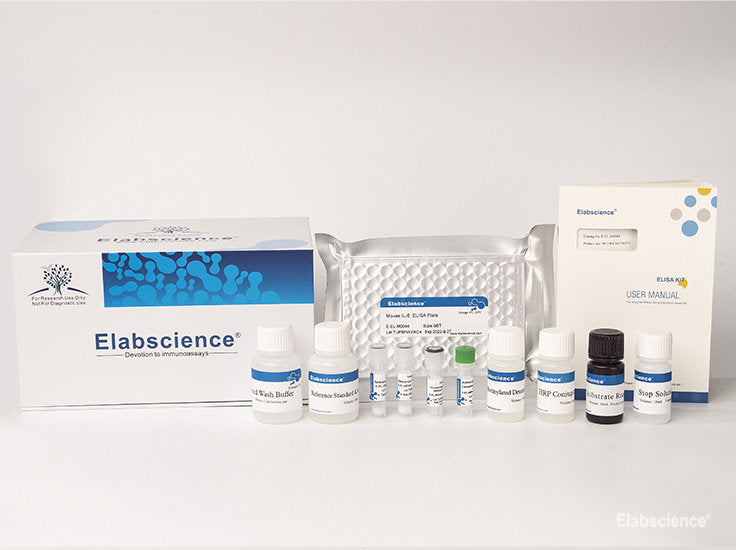
Human NEO1(Neogenin 1) ELISA Kit
Human NEO1(Neogenin 1) ELISA Kit
Regular price
$609.00 USD
Regular price
Sale price
$609.00 USD
Unit price
/
per
Shipping calculated at checkout.
Couldn't load pickup availability
Introducing the HUMAN NEO1 (NEOGENIN 1) ELISA Kit, a cutting-edge solution designed to facilitate accurate and efficient detection of NEO1 (NEOGENIN 1) protein levels in human samples. This advanced kit is meticulously crafted to cater to the needs of researchers and scientists in various fields, enabling them to delve deeper into the intricate mechanisms of NEO1 (NEOGENIN 1) and its associated biological processes.
With its state-of-the-art technology, the HUMAN NEO1 (NEOGENIN 1) ELISA Kit offers unparalleled sensitivity and specificity, ensuring reliable and reproducible results. The kit includes all the necessary components, meticulously optimized to guarantee optimal performance and ease of use. Its user-friendly design allows for seamless integration into laboratory workflows, minimizing any potential disruptions and maximizing productivity.
The HUMAN NEO1 (NEOGENIN 1) ELISA Kit boasts a wide dynamic range, enabling accurate quantification of NEO1 (NEOGENIN 1) protein levels across a broad spectrum. This versatility empowers researchers to explore a myriad of applications, ranging from basic research to clinical diagnostics. Furthermore, the kit's robustness and stability ensure consistent performance, even when handling large sample volumes or challenging sample matrices.
In addition to its exceptional performance, the HUMAN NEO1 (NEOGENIN 1) ELISA Kit adheres to the highest quality standards. Each component undergoes rigorous quality control measures to guarantee batch-to-batch consistency and reliability. Furthermore, the kit is manufactured in compliance with stringent regulatory guidelines, ensuring its suitability for use in various research and diagnostic settings.
In summary, the HUMAN NEO1 (NEOGENIN 1) ELISA Kit represents a breakthrough in NEO1 (NEOGENIN 1) protein detection, offering researchers an invaluable tool to unravel the complexities of this vital protein. With its unrivaled sensitivity, specificity, and ease of use, this kit is poised to revolutionize the field of NEO1 (NEOGENIN 1) research, empowering scientists to make significant strides in understanding its role in human biology.
With its state-of-the-art technology, the HUMAN NEO1 (NEOGENIN 1) ELISA Kit offers unparalleled sensitivity and specificity, ensuring reliable and reproducible results. The kit includes all the necessary components, meticulously optimized to guarantee optimal performance and ease of use. Its user-friendly design allows for seamless integration into laboratory workflows, minimizing any potential disruptions and maximizing productivity.
The HUMAN NEO1 (NEOGENIN 1) ELISA Kit boasts a wide dynamic range, enabling accurate quantification of NEO1 (NEOGENIN 1) protein levels across a broad spectrum. This versatility empowers researchers to explore a myriad of applications, ranging from basic research to clinical diagnostics. Furthermore, the kit's robustness and stability ensure consistent performance, even when handling large sample volumes or challenging sample matrices.
In addition to its exceptional performance, the HUMAN NEO1 (NEOGENIN 1) ELISA Kit adheres to the highest quality standards. Each component undergoes rigorous quality control measures to guarantee batch-to-batch consistency and reliability. Furthermore, the kit is manufactured in compliance with stringent regulatory guidelines, ensuring its suitability for use in various research and diagnostic settings.
In summary, the HUMAN NEO1 (NEOGENIN 1) ELISA Kit represents a breakthrough in NEO1 (NEOGENIN 1) protein detection, offering researchers an invaluable tool to unravel the complexities of this vital protein. With its unrivaled sensitivity, specificity, and ease of use, this kit is poised to revolutionize the field of NEO1 (NEOGENIN 1) research, empowering scientists to make significant strides in understanding its role in human biology.
Share