1
/
of
1
Elabscience
SKU:E-EL-R0566
Rat IL-17A(Interleukin 17A) ELISA Kit
Rat IL-17A(Interleukin 17A) ELISA Kit
Regular price
$495.00 USD
Regular price
Sale price
$495.00 USD
Unit price
/
per
Shipping calculated at checkout.
Couldn't load pickup availability
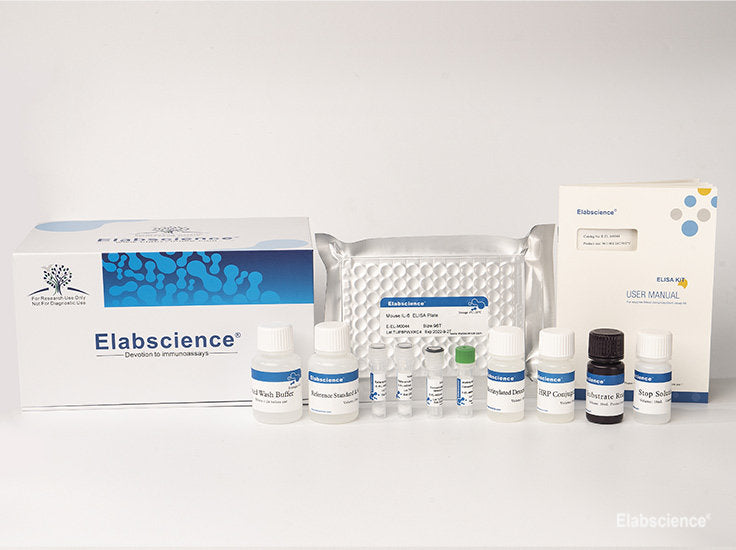
The RAT IL-17A (Interleukin 17A) ELISA Kit is a highly reliable and efficient tool designed for the quantitative measurement of IL-17A in rat samples. Interleukin 17A is a pro-inflammatory cytokine that plays a crucial role in various immune responses and inflammatory diseases. This ELISA kit provides researchers with a precise and accurate method to assess IL-17A levels in rat samples, enabling a deeper understanding of its role in disease progression and therapeutic interventions.
This ELISA kit offers a user-friendly and straightforward protocol, ensuring ease of use and reproducibility. The kit includes all the necessary components, including pre-coated microplates, standards, controls, and detection reagents, allowing for a hassle-free and time-saving experiment setup. The assay is based on the principle of a sandwich enzyme immunoassay, utilizing specific antibodies that bind to IL-17A with high affinity and specificity. The sensitivity of this kit is <1 pg/mL, ensuring the detection of even low levels of IL-17A in rat samples.
With this RAT IL-17A ELISA Kit, researchers can obtain accurate and reliable results within a short period. The kit has been optimized to minimize cross-reactivity with other cytokines, ensuring specificity in IL-17A detection. The wide dynamic range of the assay allows for the quantification of IL-17A in a variety of sample types, including serum, plasma, and tissue homogenates. The results obtained from this ELISA kit can provide valuable insights into the role of IL-17A in various diseases, such as autoimmune disorders, inflammatory bowel disease, and rheumatoid arthritis, facilitating the development of targeted therapies and potential biomarkers for disease diagnosis and prognosis.
In summary, the RAT IL-17A ELISA Kit is a comprehensive and reliable tool for the quantitative measurement of IL-17A in rat samples. Its user-friendly protocol, high sensitivity, and specificity make it an ideal choice for researchers studying the role of IL-17A in immune responses and inflammatory diseases. By utilizing this kit, researchers can gain valuable insights into disease mechanisms and potentially contribute to the development of novel therapeutic strategies.
This ELISA kit offers a user-friendly and straightforward protocol, ensuring ease of use and reproducibility. The kit includes all the necessary components, including pre-coated microplates, standards, controls, and detection reagents, allowing for a hassle-free and time-saving experiment setup. The assay is based on the principle of a sandwich enzyme immunoassay, utilizing specific antibodies that bind to IL-17A with high affinity and specificity. The sensitivity of this kit is <1 pg/mL, ensuring the detection of even low levels of IL-17A in rat samples.
With this RAT IL-17A ELISA Kit, researchers can obtain accurate and reliable results within a short period. The kit has been optimized to minimize cross-reactivity with other cytokines, ensuring specificity in IL-17A detection. The wide dynamic range of the assay allows for the quantification of IL-17A in a variety of sample types, including serum, plasma, and tissue homogenates. The results obtained from this ELISA kit can provide valuable insights into the role of IL-17A in various diseases, such as autoimmune disorders, inflammatory bowel disease, and rheumatoid arthritis, facilitating the development of targeted therapies and potential biomarkers for disease diagnosis and prognosis.
In summary, the RAT IL-17A ELISA Kit is a comprehensive and reliable tool for the quantitative measurement of IL-17A in rat samples. Its user-friendly protocol, high sensitivity, and specificity make it an ideal choice for researchers studying the role of IL-17A in immune responses and inflammatory diseases. By utilizing this kit, researchers can gain valuable insights into disease mechanisms and potentially contribute to the development of novel therapeutic strategies.
Share