1
/
of
1
Elabscience
SKU:E-EL-R2558
Rat PⅡCP(Procollagen Ⅱ C-Terminal ProPeptide) ELISA Kit
Rat PⅡCP(Procollagen Ⅱ C-Terminal ProPeptide) ELISA Kit
Regular price
$609.00 USD
Regular price
Sale price
$609.00 USD
Unit price
/
per
Shipping calculated at checkout.
Couldn't load pickup availability
Introducing the Rat PⅡCP (Procollagen Ⅱ C-Terminal ProPeptide) ELISA Kit, a cutting-edge solution designed to accurately quantify the levels of Procollagen Ⅱ C-Terminal ProPeptide in rat samples. This advanced kit is meticulously crafted to meet the highest standards of precision and reliability, ensuring optimal results for researchers and scientists in the field.
The Rat PⅡCP ELISA Kit utilizes the enzyme-linked immunosorbent assay (ELISA) technique, a widely recognized and trusted method for quantifying specific proteins. By employing a highly specific antibody, this kit enables the detection and quantification of Procollagen Ⅱ C-Terminal ProPeptide with exceptional sensitivity and specificity.
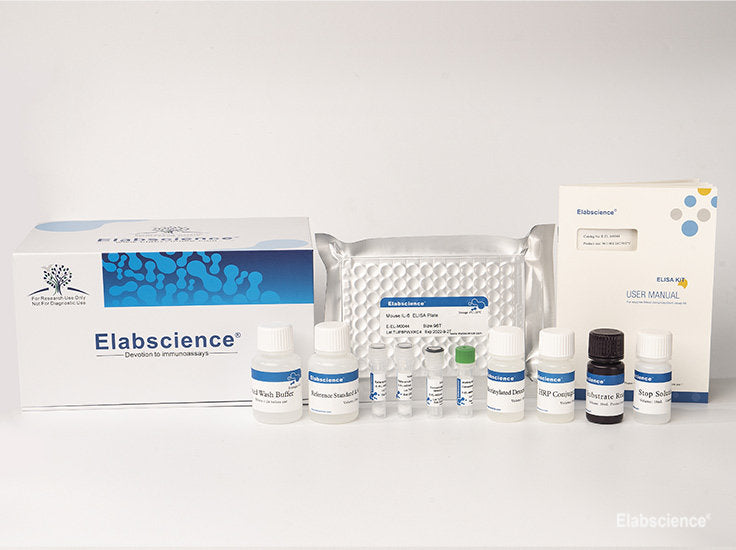
With its user-friendly protocol, the Rat PⅡCP ELISA Kit offers a streamlined workflow, allowing for efficient and time-saving experimentation. The kit includes all necessary components, including pre-coated microplates, standards, controls, and reagents, ensuring convenience and ease of use.
The Rat PⅡCP ELISA Kit boasts an impressive dynamic range, enabling the accurate measurement of Procollagen Ⅱ C-Terminal ProPeptide concentrations within a wide spectrum. This versatility makes it an invaluable tool for various research applications, including but not limited to studies on collagen metabolism, cartilage development, and osteoarthritis.
Furthermore, the Rat PⅡCP ELISA Kit guarantees exceptional reproducibility, ensuring consistent and reliable results across multiple experiments. Its robust design and stringent quality control measures guarantee the utmost accuracy and precision, allowing researchers to confidently analyze and interpret their data.
In summary, the Rat PⅡCP (Procollagen Ⅱ C-Terminal ProPeptide) ELISA Kit is a state-of-the-art solution that empowers researchers with the ability to accurately quantify Procollagen Ⅱ C-Terminal ProPeptide levels in rat samples. With its exceptional sensitivity, user-friendly protocol, and remarkable reproducibility, this kit is an indispensable asset for scientists seeking to unravel the complexities of collagen metabolism and related research areas.
The Rat PⅡCP ELISA Kit utilizes the enzyme-linked immunosorbent assay (ELISA) technique, a widely recognized and trusted method for quantifying specific proteins. By employing a highly specific antibody, this kit enables the detection and quantification of Procollagen Ⅱ C-Terminal ProPeptide with exceptional sensitivity and specificity.
With its user-friendly protocol, the Rat PⅡCP ELISA Kit offers a streamlined workflow, allowing for efficient and time-saving experimentation. The kit includes all necessary components, including pre-coated microplates, standards, controls, and reagents, ensuring convenience and ease of use.
The Rat PⅡCP ELISA Kit boasts an impressive dynamic range, enabling the accurate measurement of Procollagen Ⅱ C-Terminal ProPeptide concentrations within a wide spectrum. This versatility makes it an invaluable tool for various research applications, including but not limited to studies on collagen metabolism, cartilage development, and osteoarthritis.
Furthermore, the Rat PⅡCP ELISA Kit guarantees exceptional reproducibility, ensuring consistent and reliable results across multiple experiments. Its robust design and stringent quality control measures guarantee the utmost accuracy and precision, allowing researchers to confidently analyze and interpret their data.
In summary, the Rat PⅡCP (Procollagen Ⅱ C-Terminal ProPeptide) ELISA Kit is a state-of-the-art solution that empowers researchers with the ability to accurately quantify Procollagen Ⅱ C-Terminal ProPeptide levels in rat samples. With its exceptional sensitivity, user-friendly protocol, and remarkable reproducibility, this kit is an indispensable asset for scientists seeking to unravel the complexities of collagen metabolism and related research areas.
Share