1
/
of
1
Elabscience
SKU:E-CL-H0004
Human ADP/Acrp30(Adiponectin) CLIA Kit
Human ADP/Acrp30(Adiponectin) CLIA Kit
Regular price
$682.00 USD
Regular price
Sale price
$682.00 USD
Unit price
/
per
Shipping calculated at checkout.
Couldn't load pickup availability
Introducing the Human ADP/Acrp30 (Adiponectin) CLIA Kit, a cutting-edge solution designed to accurately measure the levels of ADP/Acrp30 (Adiponectin) in human samples. This advanced kit utilizes the Chemiluminescent Immunoassay (CLIA) technique, ensuring precise and reliable results for researchers and clinicians alike.
ADP/Acrp30, also known as Adiponectin, is a hormone secreted by adipose tissue that plays a crucial role in regulating glucose and lipid metabolism. Its levels have been linked to various metabolic disorders, including obesity, diabetes, and cardiovascular diseases. Therefore, accurate measurement of ADP/Acrp30 levels is essential for understanding and managing these conditions.
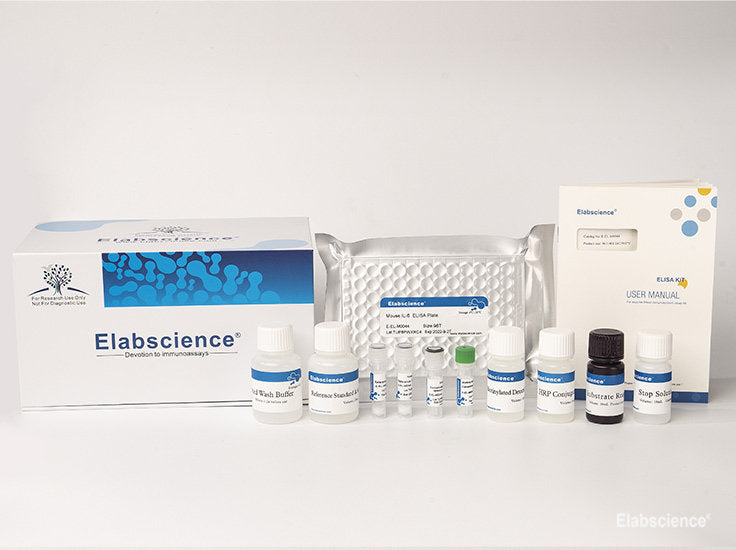
The Human ADP/Acrp30 CLIA Kit offers a comprehensive and user-friendly solution for quantifying ADP/Acrp30 levels in human samples. The kit includes all necessary components, including microplates pre-coated with specific antibodies, standards, controls, and detection reagents. With a simple and straightforward protocol, users can easily perform the assay with minimal hands-on time.
The CLIA technique employed in this kit ensures high sensitivity and specificity, enabling the detection of ADP/Acrp30 levels as low as 0.1 ng/mL. This exceptional sensitivity allows for accurate quantification even in samples with low ADP/Acrp30 concentrations. Additionally, the kit exhibits excellent intra- and inter-assay precision, ensuring reliable and reproducible results.
The Human ADP/Acrp30 CLIA Kit is suitable for a wide range of applications, including clinical research, drug development, and biomarker discovery. Its versatility enables researchers and clinicians to gain valuable insights into the role of ADP/Acrp30 in various physiological and pathological conditions.
In summary, the Human ADP/Acrp30 CLIA Kit offers a state-of-the-art solution for the precise measurement of ADP/Acrp30 levels in human samples. With its high sensitivity, accuracy, and user-friendly design, this kit is an indispensable tool for advancing research and improving patient care in the field of metabolic disorders.
ADP/Acrp30, also known as Adiponectin, is a hormone secreted by adipose tissue that plays a crucial role in regulating glucose and lipid metabolism. Its levels have been linked to various metabolic disorders, including obesity, diabetes, and cardiovascular diseases. Therefore, accurate measurement of ADP/Acrp30 levels is essential for understanding and managing these conditions.
The Human ADP/Acrp30 CLIA Kit offers a comprehensive and user-friendly solution for quantifying ADP/Acrp30 levels in human samples. The kit includes all necessary components, including microplates pre-coated with specific antibodies, standards, controls, and detection reagents. With a simple and straightforward protocol, users can easily perform the assay with minimal hands-on time.
The CLIA technique employed in this kit ensures high sensitivity and specificity, enabling the detection of ADP/Acrp30 levels as low as 0.1 ng/mL. This exceptional sensitivity allows for accurate quantification even in samples with low ADP/Acrp30 concentrations. Additionally, the kit exhibits excellent intra- and inter-assay precision, ensuring reliable and reproducible results.
The Human ADP/Acrp30 CLIA Kit is suitable for a wide range of applications, including clinical research, drug development, and biomarker discovery. Its versatility enables researchers and clinicians to gain valuable insights into the role of ADP/Acrp30 in various physiological and pathological conditions.
In summary, the Human ADP/Acrp30 CLIA Kit offers a state-of-the-art solution for the precise measurement of ADP/Acrp30 levels in human samples. With its high sensitivity, accuracy, and user-friendly design, this kit is an indispensable tool for advancing research and improving patient care in the field of metabolic disorders.
Share