1
/
of
1
Elabscience
SKU:E-CL-M0318
Mouse GAL2(Galectin 2) CLIA Kit
Mouse GAL2(Galectin 2) CLIA Kit
Regular price
$682.00 USD
Regular price
Sale price
$682.00 USD
Unit price
/
per
Shipping calculated at checkout.
Couldn't load pickup availability
Introducing the Mouse GAL2 (Galectin 2) CLIA Kit, a cutting-edge product designed to facilitate accurate and efficient measurement of Galectin 2 levels in mouse samples. This high-quality kit is meticulously crafted to meet the demands of researchers and scientists in the field.
The Mouse GAL2 CLIA Kit employs the Chemiluminescent Immunoassay (CLIA) technique, a highly sensitive and reliable method for quantifying Galectin 2. With its advanced technology, this kit ensures precise and reproducible results, enabling researchers to obtain valuable insights into Galectin 2 expression and its role in various biological processes.
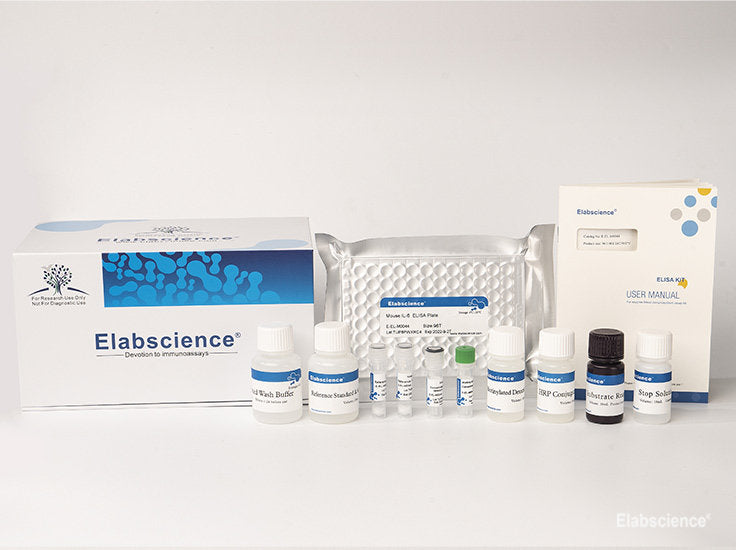
This comprehensive kit includes all the necessary components for a seamless assay, including pre-coated microplates, assay buffers, standards, and controls. The user-friendly protocol allows for easy and efficient execution, saving valuable time and resources in the laboratory.
The Mouse GAL2 CLIA Kit offers a wide dynamic range, enabling accurate quantification of Galectin 2 levels across a broad spectrum. Its exceptional sensitivity allows for the detection of even low levels of Galectin 2, ensuring reliable and precise measurements.
With its exceptional performance and reliability, the Mouse GAL2 CLIA Kit is an indispensable tool for researchers and scientists studying Galectin 2 in mouse samples. Whether investigating its involvement in disease progression, exploring its therapeutic potential, or unraveling its biological functions, this kit provides the necessary precision and accuracy to advance scientific understanding.
Invest in the Mouse GAL2 CLIA Kit today and unlock the potential of Galectin 2 research in mice. Experience the confidence of obtaining reliable and reproducible results, empowering you to make significant contributions to the scientific community.
The Mouse GAL2 CLIA Kit employs the Chemiluminescent Immunoassay (CLIA) technique, a highly sensitive and reliable method for quantifying Galectin 2. With its advanced technology, this kit ensures precise and reproducible results, enabling researchers to obtain valuable insights into Galectin 2 expression and its role in various biological processes.
This comprehensive kit includes all the necessary components for a seamless assay, including pre-coated microplates, assay buffers, standards, and controls. The user-friendly protocol allows for easy and efficient execution, saving valuable time and resources in the laboratory.
The Mouse GAL2 CLIA Kit offers a wide dynamic range, enabling accurate quantification of Galectin 2 levels across a broad spectrum. Its exceptional sensitivity allows for the detection of even low levels of Galectin 2, ensuring reliable and precise measurements.
With its exceptional performance and reliability, the Mouse GAL2 CLIA Kit is an indispensable tool for researchers and scientists studying Galectin 2 in mouse samples. Whether investigating its involvement in disease progression, exploring its therapeutic potential, or unraveling its biological functions, this kit provides the necessary precision and accuracy to advance scientific understanding.
Invest in the Mouse GAL2 CLIA Kit today and unlock the potential of Galectin 2 research in mice. Experience the confidence of obtaining reliable and reproducible results, empowering you to make significant contributions to the scientific community.
Share