1
/
of
1
Elabscience
SKU:E-CL-M0551
Mouse PAI-1(Plasminogen Activator Inhibitor 1) CLIA Kit
Mouse PAI-1(Plasminogen Activator Inhibitor 1) CLIA Kit
Regular price
$682.00 USD
Regular price
Sale price
$682.00 USD
Unit price
/
per
Shipping calculated at checkout.
Couldn't load pickup availability
The Mouse PAI-1 (Plasminogen Activator Inhibitor 1) CLIA Kit is a highly advanced and reliable diagnostic tool designed for the accurate measurement of PAI-1 levels in mouse samples. This cutting-edge kit utilizes the Chemiluminescent Immunoassay (CLIA) technique, ensuring exceptional sensitivity and specificity in detecting and quantifying PAI-1.
PAI-1, a crucial protein involved in the regulation of fibrinolysis, plays a pivotal role in maintaining the delicate balance between clot formation and dissolution. Dysregulation of PAI-1 levels has been implicated in various pathological conditions, including thrombosis, cardiovascular diseases, and cancer. Therefore, precise measurement of PAI-1 levels is of utmost importance in both research and clinical settings.
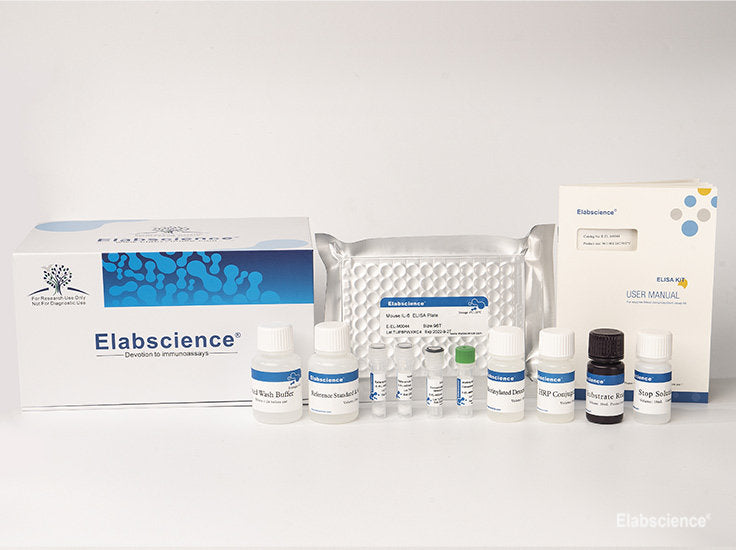
The Mouse PAI-1 CLIA Kit offers unparalleled accuracy and reproducibility, enabling researchers and healthcare professionals to obtain reliable and consistent results. This kit includes all the necessary components, including pre-coated microplates, standards, controls, and reagents, ensuring convenience and ease of use.
With a wide dynamic range and low detection limit, this CLIA kit allows for the precise quantification of PAI-1 levels in a variety of mouse samples, including plasma, serum, and tissue lysates. The assay procedure is straightforward, requiring minimal hands-on time and providing rapid results, making it an ideal choice for high-throughput applications.
Furthermore, the Mouse PAI-1 CLIA Kit has been rigorously validated and optimized to ensure exceptional performance and accuracy. It exhibits excellent specificity, with minimal cross-reactivity with other related proteins, ensuring reliable and specific measurement of PAI-1 levels.
In summary, the Mouse PAI-1 CLIA Kit is a state-of-the-art diagnostic tool that offers exceptional sensitivity, specificity, and accuracy in measuring PAI-1 levels in mouse samples. Its user-friendly design, rapid results, and reliable performance make it an indispensable asset for researchers and healthcare professionals involved in studying and diagnosing PAI-1-related disorders.
PAI-1, a crucial protein involved in the regulation of fibrinolysis, plays a pivotal role in maintaining the delicate balance between clot formation and dissolution. Dysregulation of PAI-1 levels has been implicated in various pathological conditions, including thrombosis, cardiovascular diseases, and cancer. Therefore, precise measurement of PAI-1 levels is of utmost importance in both research and clinical settings.
The Mouse PAI-1 CLIA Kit offers unparalleled accuracy and reproducibility, enabling researchers and healthcare professionals to obtain reliable and consistent results. This kit includes all the necessary components, including pre-coated microplates, standards, controls, and reagents, ensuring convenience and ease of use.
With a wide dynamic range and low detection limit, this CLIA kit allows for the precise quantification of PAI-1 levels in a variety of mouse samples, including plasma, serum, and tissue lysates. The assay procedure is straightforward, requiring minimal hands-on time and providing rapid results, making it an ideal choice for high-throughput applications.
Furthermore, the Mouse PAI-1 CLIA Kit has been rigorously validated and optimized to ensure exceptional performance and accuracy. It exhibits excellent specificity, with minimal cross-reactivity with other related proteins, ensuring reliable and specific measurement of PAI-1 levels.
In summary, the Mouse PAI-1 CLIA Kit is a state-of-the-art diagnostic tool that offers exceptional sensitivity, specificity, and accuracy in measuring PAI-1 levels in mouse samples. Its user-friendly design, rapid results, and reliable performance make it an indispensable asset for researchers and healthcare professionals involved in studying and diagnosing PAI-1-related disorders.
Share