1
/
of
1
Elabscience
SKU:E-CL-R0067
Rat bFGF/FGF2(Basic Fibroblast Growth Factor) CLIA Kit
Rat bFGF/FGF2(Basic Fibroblast Growth Factor) CLIA Kit
Regular price
$682.00 USD
Regular price
Sale price
$682.00 USD
Unit price
/
per
Shipping calculated at checkout.
Couldn't load pickup availability
Introducing the Rat bFGF/FGF2 (Basic Fibroblast Growth Factor) CLIA Kit, a cutting-edge solution designed to accurately measure the levels of bFGF/FGF2 in rat samples. This high-quality kit is meticulously crafted to provide researchers and scientists with reliable and precise results for their studies.
The Rat bFGF/FGF2 CLIA Kit utilizes the Chemiluminescent Immunoassay (CLIA) technique, a highly sensitive and efficient method for detecting and quantifying bFGF/FGF2. This advanced technology ensures optimal performance and enables the detection of even low levels of bFGF/FGF2 in rat samples.
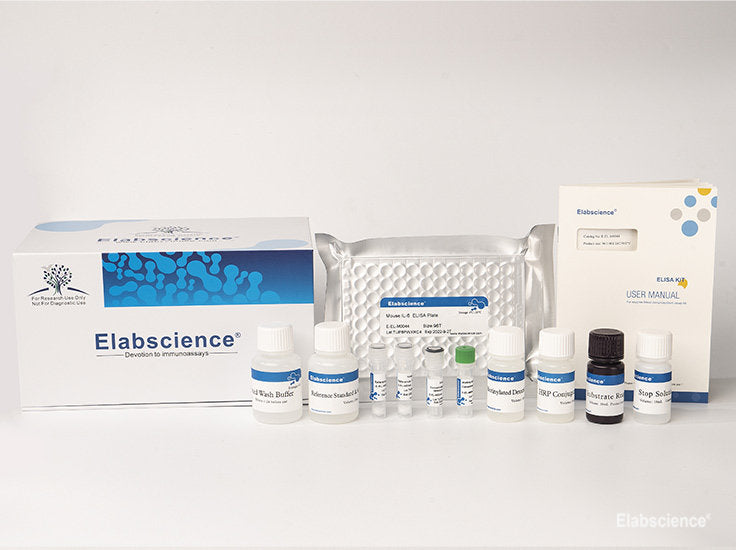
With its user-friendly design, the Rat bFGF/FGF2 CLIA Kit offers a streamlined workflow, allowing for seamless integration into laboratory protocols. The kit includes all necessary components, including pre-coated microplates, standards, controls, and reagents, ensuring convenience and ease of use.
The Rat bFGF/FGF2 CLIA Kit boasts exceptional accuracy and precision, enabling researchers to obtain reliable and reproducible results. Its wide dynamic range ensures the detection of bFGF/FGF2 concentrations across a broad spectrum, accommodating various experimental requirements.
This CLIA Kit is specifically tailored for rat samples, ensuring optimal specificity and sensitivity. It is meticulously validated to guarantee consistent and accurate results, making it an indispensable tool for researchers studying bFGF/FGF2 in rat models.
In summary, the Rat bFGF/FGF2 CLIA Kit is a state-of-the-art solution that empowers researchers and scientists with the ability to accurately measure bFGF/FGF2 levels in rat samples. With its advanced technology, user-friendly design, and exceptional accuracy, this kit is an invaluable asset for studies involving bFGF/FGF2 in rat models.
The Rat bFGF/FGF2 CLIA Kit utilizes the Chemiluminescent Immunoassay (CLIA) technique, a highly sensitive and efficient method for detecting and quantifying bFGF/FGF2. This advanced technology ensures optimal performance and enables the detection of even low levels of bFGF/FGF2 in rat samples.
With its user-friendly design, the Rat bFGF/FGF2 CLIA Kit offers a streamlined workflow, allowing for seamless integration into laboratory protocols. The kit includes all necessary components, including pre-coated microplates, standards, controls, and reagents, ensuring convenience and ease of use.
The Rat bFGF/FGF2 CLIA Kit boasts exceptional accuracy and precision, enabling researchers to obtain reliable and reproducible results. Its wide dynamic range ensures the detection of bFGF/FGF2 concentrations across a broad spectrum, accommodating various experimental requirements.
This CLIA Kit is specifically tailored for rat samples, ensuring optimal specificity and sensitivity. It is meticulously validated to guarantee consistent and accurate results, making it an indispensable tool for researchers studying bFGF/FGF2 in rat models.
In summary, the Rat bFGF/FGF2 CLIA Kit is a state-of-the-art solution that empowers researchers and scientists with the ability to accurately measure bFGF/FGF2 levels in rat samples. With its advanced technology, user-friendly design, and exceptional accuracy, this kit is an invaluable asset for studies involving bFGF/FGF2 in rat models.
Share