ABCbiolab
SKU:ABCCS60191
IGHM Antibody
IGHM Antibody
Couldn't load pickup availability
Size
100ug
Clone Number
Aliases
IGHMImmunoglobulin heavy constant mu antibody; Ig mu chain C region antibody; Ig mu chain C region BOT antibody; Ig mu chain C region GAL antibody; Ig mu chain C region OU antibody
Immunogen Species
Homo sapiens (Human)
UniProt ID
P01871
Immunogen
Recombinant Human Immunoglobulin heavy constant mu protein (45-178AA)
Raised in
Rabbit
Species Reactivity
Human
Tested Applications
ELISA, WB, IHC; Recommended dilution: WB:1:500-1:5000, IHC:1:500-1:1000
Background
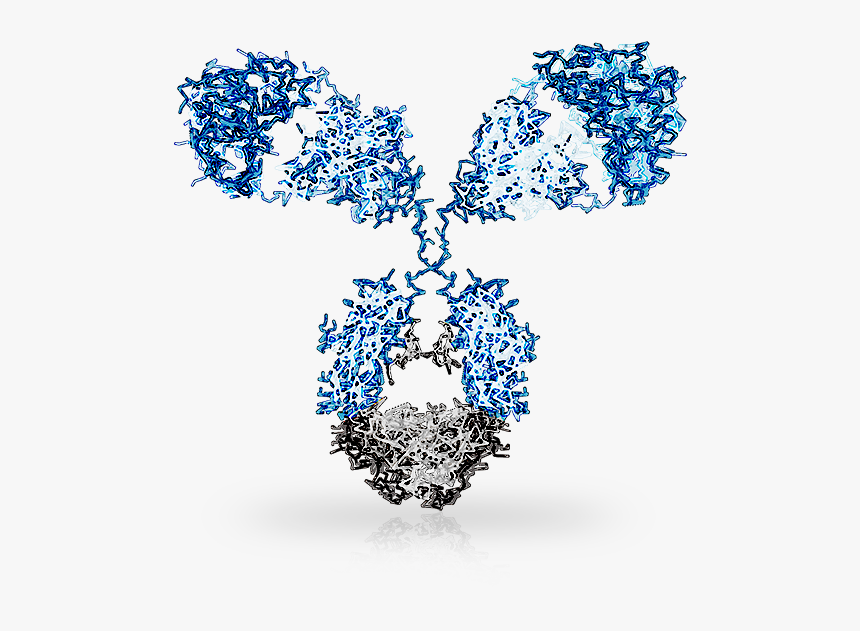
Constant region of immunoglobulin heavy chains. Immunoglobulins, also known as antibodies, are membrane-bound or secreted glycoproteins produced by B lymphocytes. In the recognition phase of humoral immunity, the membrane-bound immunoglobulins serve as receptors which, upon binding of a specific antigen, trigger the clonal expansion and differentiation of B lymphocytes into immunoglobulins-secreting plasma cells. Secreted immunoglobulins mediate the effector phase of humoral immunity, which results in the elimination of bound antigens (PubMed:22158414, PubMed:20176268). The antigen binding site is formed by the variable domain of one heavy chain, together with that of its associated light chain. Thus, each immunoglobulin has two antigen binding sites with remarkable affinity for a particular antigen. The variable domains are assembled by a process called V-(D)-J rearrangement and can then be subjected to somatic hypermutations which, after exposure to antigen and selection, allow affinity maturation for a particular antigen (PubMed:17576170, PubMed:20176268). IgM antibodies play an important role in primary defense mechanisms. They have been shown to be involved in early recognition of external invaders like bacteria and viruses, cellular waste and modified self, as well as in recognition and elimination of precancerous and cancerous lesions. The membrane-bound form is found in the majority of normal B-cells alongside with IgD. Membrane-bound IgM induces the phosphorylation of CD79A and CD79B by the Src family of protein tyrosine kinases. It may cause death of cells by apoptosis. It is also found in soluble form, which represents about 30% of the total serum immunoglobulins where it is found almost exclusively as a homopentamer. After the antigen binds to the B-cell receptor, the secreted form is secreted in large amounts (PubMed:3137579, PubMed:16895553).
Clonality
Polyclonal
Isotype
IgG
Purification Method
>95%, Protein G purified
Conjugate
Non-conjugated
Buffer
Preservative: 0.03% Proclin 300
Constituents: 50% Glycerol, 0.01M PBS, pH 7.4
Form
Liquid
Stroage
Upon receipt, store at -20°C or -80°C. Avoid repeated freeze.
Target Names
IGHM
Research Areas
Immunology
Share