1
/
of
1
ELK Biotechnology
SKU:ES9514
CHAC1 rabbit pAb
CHAC1 rabbit pAb
Regular price
$250.00 USD
Regular price
Sale price
$250.00 USD
Unit price
/
per
Shipping calculated at checkout.
Couldn't load pickup availability
Applications: WB;ELISA
Reactivity: Human;Rat;Mouse;
Source: Rabbit
Dilution: WB 1:500-2000 ELISA 1:5000-20000
Immunogen: Synthesized peptide derived from part region of human protein
Storage_stability: -20°C/1 year
Clonality: Polyclonal
Isotype: IgG
Concentration: 1 mg/ml
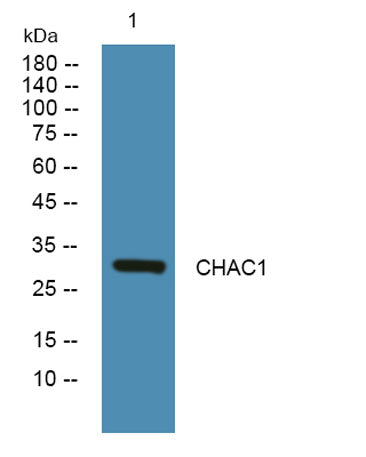
Observed_band(KD): 24kD
Human_gene_id: 79094
Human_swiss_prot_no: Q9BUX1
Subcellular_location: Cytoplasm, cytosol . Golgi apparatus, trans-Golgi network .
Background: This gene encodes a member of the gamma-glutamylcyclotransferase family of proteins. The encoded protein has been shown to promote neuronal differentiation by deglycination of the Notch receptor, which prevents receptor maturation and inhibits Notch signaling. This protein may also play a role in the unfolded protein response, and in regulation of glutathione levels and oxidative balance in the cell. Elevated expression of this gene may indicate increased risk of cancer recurrence among breast and ovarian cancer patients. [provided by RefSeq, Sep 2016],
Reactivity: Human;Rat;Mouse;
Source: Rabbit
Dilution: WB 1:500-2000 ELISA 1:5000-20000
Immunogen: Synthesized peptide derived from part region of human protein
Storage_stability: -20°C/1 year
Clonality: Polyclonal
Isotype: IgG
Concentration: 1 mg/ml
Observed_band(KD): 24kD
Human_gene_id: 79094
Human_swiss_prot_no: Q9BUX1
Subcellular_location: Cytoplasm, cytosol . Golgi apparatus, trans-Golgi network .
Background: This gene encodes a member of the gamma-glutamylcyclotransferase family of proteins. The encoded protein has been shown to promote neuronal differentiation by deglycination of the Notch receptor, which prevents receptor maturation and inhibits Notch signaling. This protein may also play a role in the unfolded protein response, and in regulation of glutathione levels and oxidative balance in the cell. Elevated expression of this gene may indicate increased risk of cancer recurrence among breast and ovarian cancer patients. [provided by RefSeq, Sep 2016],
Share