1
/
of
1
ELK Biotechnology
SKU:ES8768
ASPP1 rabbit pAb
ASPP1 rabbit pAb
Regular price
$250.00 USD
Regular price
Sale price
$250.00 USD
Unit price
/
per
Shipping calculated at checkout.
Couldn't load pickup availability
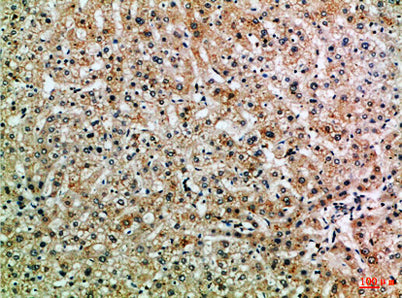
Applications: IHC;IF;ELISA
Reactivity: Human;Rat;Mouse;
Source: Rabbit
Dilution: IHC-p 1:50-200, ELISA 1:10000-20000
Immunogen: Synthetic peptide from human protein at AA range: 630-680
Storage_stability: -20°C/1 year
Clonality: Polyclonal
Isotype: IgG
Concentration: 1 mg/ml
Human_gene_id: 23368
Human_swiss_prot_no: Q96KQ4
Subcellular_location: Cytoplasm . Nucleus . Predominantly cytoplasmic. Some fraction is nuclear.
Other_name: Apoptosis-stimulating of p53 protein 1 (Protein phosphatase 1 regulatory subunit 13B)
Background: This gene encodes a member of the ASPP (apoptosis-stimulating protein of p53) family of p53 interacting proteins. The protein contains four ankyrin repeats and an SH3 domain involved in protein-protein interactions. ASPP proteins are required for the induction of apoptosis by p53-family proteins. They promote DNA binding and transactivation of p53-family proteins on the promoters of proapoptotic genes. Expression of this gene is regulated by the E2F transcription factor. [provided by RefSeq, Jul 2008],
Reactivity: Human;Rat;Mouse;
Source: Rabbit
Dilution: IHC-p 1:50-200, ELISA 1:10000-20000
Immunogen: Synthetic peptide from human protein at AA range: 630-680
Storage_stability: -20°C/1 year
Clonality: Polyclonal
Isotype: IgG
Concentration: 1 mg/ml
Human_gene_id: 23368
Human_swiss_prot_no: Q96KQ4
Subcellular_location: Cytoplasm . Nucleus . Predominantly cytoplasmic. Some fraction is nuclear.
Other_name: Apoptosis-stimulating of p53 protein 1 (Protein phosphatase 1 regulatory subunit 13B)
Background: This gene encodes a member of the ASPP (apoptosis-stimulating protein of p53) family of p53 interacting proteins. The protein contains four ankyrin repeats and an SH3 domain involved in protein-protein interactions. ASPP proteins are required for the induction of apoptosis by p53-family proteins. They promote DNA binding and transactivation of p53-family proteins on the promoters of proapoptotic genes. Expression of this gene is regulated by the E2F transcription factor. [provided by RefSeq, Jul 2008],
Share