1
/
of
1
ELK Biotechnology
SKU:ES8447
E2F-3 (Acetyl Lys168) rabbit pAb
E2F-3 (Acetyl Lys168) rabbit pAb
Regular price
$250.00 USD
Regular price
Sale price
$250.00 USD
Unit price
/
per
Shipping calculated at checkout.
Couldn't load pickup availability
Applications: WB;ELISA
Reactivity: Human;Mouse;Rat
Source: Rabbit
Dilution: WB: 1:500-10000 ELISA: 1:10000
Immunogen: Synthesized acetyl-peptide from human protein at AA range: 130-200
Storage_stability: -20°C/1 year
Clonality: Polyclonal
Isotype: IgG
Concentration: 1 mg/ml
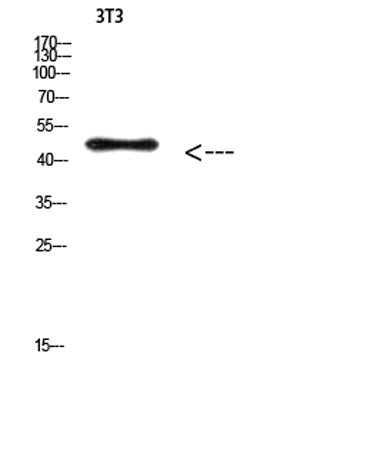
Observed_band(KD): 50kD
Human_gene_id: 1871
Human_swiss_prot_no: O00716
Subcellular_location: Nucleus.
Other_name: E2F3 KIAA0075
Background: This gene encodes a member of a small family of transcription factors that function through binding of DP interaction partner proteins. The encoded protein recognizes a specific sequence motif in DNA and interacts directly with the retinoblastoma protein (pRB) to regulate the expression of genes involved in the cell cycle. Altered copy number and activity of this gene have been observed in a number of human cancers. There are pseudogenes for this gene on chromosomes 2 and 17. Alternative splicing results in multiple transcript variants. [provided by RefSeq, Mar 2013],
Reactivity: Human;Mouse;Rat
Source: Rabbit
Dilution: WB: 1:500-10000 ELISA: 1:10000
Immunogen: Synthesized acetyl-peptide from human protein at AA range: 130-200
Storage_stability: -20°C/1 year
Clonality: Polyclonal
Isotype: IgG
Concentration: 1 mg/ml
Observed_band(KD): 50kD
Human_gene_id: 1871
Human_swiss_prot_no: O00716
Subcellular_location: Nucleus.
Other_name: E2F3 KIAA0075
Background: This gene encodes a member of a small family of transcription factors that function through binding of DP interaction partner proteins. The encoded protein recognizes a specific sequence motif in DNA and interacts directly with the retinoblastoma protein (pRB) to regulate the expression of genes involved in the cell cycle. Altered copy number and activity of this gene have been observed in a number of human cancers. There are pseudogenes for this gene on chromosomes 2 and 17. Alternative splicing results in multiple transcript variants. [provided by RefSeq, Mar 2013],
Share