1
/
of
1
ELK Biotechnology
SKU:ES8373
Karyopherin α2 rabbit pAb
Karyopherin α2 rabbit pAb
Regular price
$250.00 USD
Regular price
Sale price
$250.00 USD
Unit price
/
per
Shipping calculated at checkout.
Couldn't load pickup availability
Applications: WB;IHC;IF;ELISA
Reactivity: Human;Mouse;Rat
Source: Rabbit
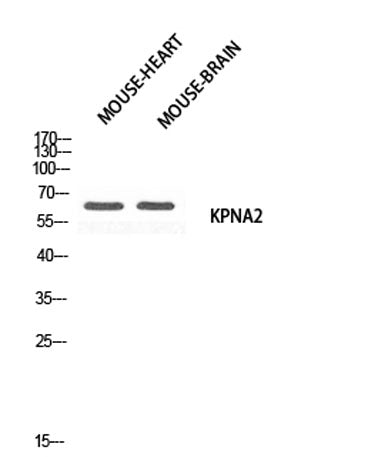
Dilution: IHC-p: 100-300.Western Blot: 1/500 - 1/2000. ELISA: 1/10000. Not yet tested in other applications.
Immunogen: Synthesized peptide derived from the N-terminal region of human Karyopherin α2.
Storage_stability: -20°C/1 year
Clonality: Polyclonal
Isotype: IgG
Concentration: 1 mg/ml
Observed_band(KD): 60kD
Human_gene_id: 3838
Human_swiss_prot_no: P52292
Subcellular_location: Cytoplasm . Nucleus .; Endoplasmic reticulum membrane. Golgi apparatus membrane . (Microbial infection) Retained in ER/Golgi membranes upon interaction with SARS-COV virus ORF6 protein. .
Other_name: KPNA2; RCH1; SRP1; Importin subunit alpha-2; Karyopherin subunit alpha-2; RAG cohort protein 1; SRP1-alpha
Background: The import of proteins into the nucleus is a process that involves at least 2 steps. The first is an energy-independent docking of the protein to the nuclear envelope and the second is an energy-dependent translocation through the nuclear pore complex. Imported proteins require a nuclear localization sequence (NLS) which generally consists of a short region of basic amino acids or 2 such regions spaced about 10 amino acids apart. Proteins involved in the first step of nuclear import have been identified in different systems. These include the Xenopus protein importin and its yeast homolog, SRP1 (a suppressor of certain temperature-sensitive mutations of RNA polymerase I in Saccharomyces cerevisiae), which bind to the NLS. KPNA2 protein interacts with the NLSs of DNA helicase Q1 and SV40 T antigen and may be involved in the nuclear transport of proteins. KPNA2 also may play a role in V(D)J re
Reactivity: Human;Mouse;Rat
Source: Rabbit
Dilution: IHC-p: 100-300.Western Blot: 1/500 - 1/2000. ELISA: 1/10000. Not yet tested in other applications.
Immunogen: Synthesized peptide derived from the N-terminal region of human Karyopherin α2.
Storage_stability: -20°C/1 year
Clonality: Polyclonal
Isotype: IgG
Concentration: 1 mg/ml
Observed_band(KD): 60kD
Human_gene_id: 3838
Human_swiss_prot_no: P52292
Subcellular_location: Cytoplasm . Nucleus .; Endoplasmic reticulum membrane. Golgi apparatus membrane . (Microbial infection) Retained in ER/Golgi membranes upon interaction with SARS-COV virus ORF6 protein. .
Other_name: KPNA2; RCH1; SRP1; Importin subunit alpha-2; Karyopherin subunit alpha-2; RAG cohort protein 1; SRP1-alpha
Background: The import of proteins into the nucleus is a process that involves at least 2 steps. The first is an energy-independent docking of the protein to the nuclear envelope and the second is an energy-dependent translocation through the nuclear pore complex. Imported proteins require a nuclear localization sequence (NLS) which generally consists of a short region of basic amino acids or 2 such regions spaced about 10 amino acids apart. Proteins involved in the first step of nuclear import have been identified in different systems. These include the Xenopus protein importin and its yeast homolog, SRP1 (a suppressor of certain temperature-sensitive mutations of RNA polymerase I in Saccharomyces cerevisiae), which bind to the NLS. KPNA2 protein interacts with the NLSs of DNA helicase Q1 and SV40 T antigen and may be involved in the nuclear transport of proteins. KPNA2 also may play a role in V(D)J re
Share