1
/
of
1
ELK Biotechnology
SKU:ES6766
PKC (phospho Thr497) rabbit pAb
PKC (phospho Thr497) rabbit pAb
Regular price
$250.00 USD
Regular price
Sale price
$250.00 USD
Unit price
/
per
Shipping calculated at checkout.
Couldn't load pickup availability
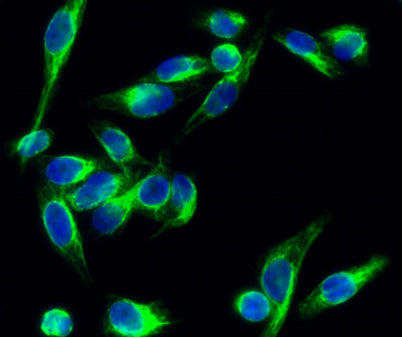
Applications: WB;IHC;IF;ELISA
Reactivity: Human;Mouse;Rat
Source: Rabbit
Dilution: Western Blot: 1/500 - 1/2000. Immunohistochemistry: 1/100 - 1/300. Immunofluorescence: 1/200 - 1/1000. ELISA: 1/40000. Not yet tested in other applications.
Immunogen: The antiserum was produced against synthesized peptide derived from human PKC-pan around the phosphorylation site of Thr497. AA range:623-672
Storage_stability: -20°C/1 year
Clonality: Polyclonal
Isotype: IgG
Concentration: 1 mg/ml
Observed_band(KD): 83kD
Human_gene_id: 5578/5579/5580/5581/5582/5583/5588/5590
Human_swiss_prot_no: P17252/P05771/Q05655/Q02156/P05129/P24723/Q04759/Q05513
Subcellular_location: Cytoplasm . Cell membrane ; Peripheral membrane protein . Mitochondrion membrane ; Peripheral membrane protein . Nucleus .
Other_name: PRKCA; PKCA; PRKACA; Protein kinase C alpha type; PKC-A; PKC-alpha; PRKCB; PKCB; PRKCB1; Protein kinase C beta type; PKC-B; PKC-beta; PRKCD; Protein kinase C delta type; Tyrosine-protein kinase PRKCD; nPKC-delta; PRKCE; PKCE; Protein kinase
Background: Protein kinase C (PKC) is a family of serine- and threonine-specific protein kinases that can be activated by calcium and the second messenger diacylglycerol. PKC family members phosphorylate a wide variety of protein targets and are known to be involved in diverse cellular signaling pathways. PKC family members also serve as major receptors for phorbol esters, a class of tumor promoters. Each member of the PKC family has a specific expression profile and is believed to play a distinct role in cells. The protein encoded by this gene is one of the PKC family members. This kinase has been reported to play roles in many different cellular processes, such as cell adhesion, cell transformation, cell cycle checkpoint, and cell volume control. Knockout studies in mice suggest that this kinase may be a fundamental regulator of cardiac contractility and Ca(2+) handling in myocytes. [provided by RefSeq, Jul 2
Reactivity: Human;Mouse;Rat
Source: Rabbit
Dilution: Western Blot: 1/500 - 1/2000. Immunohistochemistry: 1/100 - 1/300. Immunofluorescence: 1/200 - 1/1000. ELISA: 1/40000. Not yet tested in other applications.
Immunogen: The antiserum was produced against synthesized peptide derived from human PKC-pan around the phosphorylation site of Thr497. AA range:623-672
Storage_stability: -20°C/1 year
Clonality: Polyclonal
Isotype: IgG
Concentration: 1 mg/ml
Observed_band(KD): 83kD
Human_gene_id: 5578/5579/5580/5581/5582/5583/5588/5590
Human_swiss_prot_no: P17252/P05771/Q05655/Q02156/P05129/P24723/Q04759/Q05513
Subcellular_location: Cytoplasm . Cell membrane ; Peripheral membrane protein . Mitochondrion membrane ; Peripheral membrane protein . Nucleus .
Other_name: PRKCA; PKCA; PRKACA; Protein kinase C alpha type; PKC-A; PKC-alpha; PRKCB; PKCB; PRKCB1; Protein kinase C beta type; PKC-B; PKC-beta; PRKCD; Protein kinase C delta type; Tyrosine-protein kinase PRKCD; nPKC-delta; PRKCE; PKCE; Protein kinase
Background: Protein kinase C (PKC) is a family of serine- and threonine-specific protein kinases that can be activated by calcium and the second messenger diacylglycerol. PKC family members phosphorylate a wide variety of protein targets and are known to be involved in diverse cellular signaling pathways. PKC family members also serve as major receptors for phorbol esters, a class of tumor promoters. Each member of the PKC family has a specific expression profile and is believed to play a distinct role in cells. The protein encoded by this gene is one of the PKC family members. This kinase has been reported to play roles in many different cellular processes, such as cell adhesion, cell transformation, cell cycle checkpoint, and cell volume control. Knockout studies in mice suggest that this kinase may be a fundamental regulator of cardiac contractility and Ca(2+) handling in myocytes. [provided by RefSeq, Jul 2
Share