1
/
of
1
ELK Biotechnology
SKU:ES6715
PP2A-B55-β rabbit pAb
PP2A-B55-β rabbit pAb
Regular price
$250.00 USD
Regular price
Sale price
$250.00 USD
Unit price
/
per
Shipping calculated at checkout.
Couldn't load pickup availability
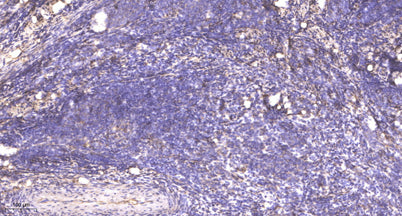
Applications: WB;IHC
Reactivity: Human;Mouse;Rat
Source: Rabbit
Dilution: WB 1:500-2000;IHC-p 1:50-300
Immunogen: Synthesized peptide derived from PP2A-B55-β . at AA range: 90-170
Storage_stability: -20°C/1 year
Clonality: Polyclonal
Isotype: IgG
Concentration: 1 mg/ml
Observed_band(KD): 51kD
Human_gene_id: 5521
Human_swiss_prot_no: Q00005
Subcellular_location: [Isoform 1]: Cytoplasm . Cytoplasm, cytoskeleton . Membrane .; [Isoform 2]: Cytoplasm . Mitochondrion . Mitochondrion outer membrane . Under basal conditions, localizes to both cytosolic and mitochondrial compartments. Relocalizes from the cytosolic to the mitochondrial compartment during apoptosis. Its targeting to the outer mitochondrial membrane (OMM) involves an association with import receptors of the TOM complex and is required to promote proapoptotic activity (By similarity). .
Other_name: PPP2R2B; Serine/threonine-protein phosphatase 2A 55 kDa regulatory subunit B beta isoform; PP2A subunit B isoform B55-beta; PP2A subunit B isoform PR55-beta; PP2A subunit B isoform R2-beta; PP2A subunit B isoform beta
Background: protein phosphatase 2 regulatory subunit Bbeta(PPP2R2B) Homo sapiens The product of this gene belongs to the phosphatase 2 regulatory subunit B family. Protein phosphatase 2 is one of the four major Ser/Thr phosphatases, and it is implicated in the negative control of cell growth and division. It consists of a common heteromeric core enzyme, which is composed of a catalytic subunit and a constant regulatory subunit, that associates with a variety of regulatory subunits. The B regulatory subunit might modulate substrate selectivity and catalytic activity. This gene encodes a beta isoform of the regulatory subunit B55 subfamily. Defects in this gene cause autosomal dominant spinocerebellar ataxia 12 (SCA12), a disease caused by degeneration of the cerebellum, sometimes involving the brainstem and spinal cord, and in resulting in poor coordination of speech and body movements. Multiple alternatively spliced variants, which encode different isofor
Reactivity: Human;Mouse;Rat
Source: Rabbit
Dilution: WB 1:500-2000;IHC-p 1:50-300
Immunogen: Synthesized peptide derived from PP2A-B55-β . at AA range: 90-170
Storage_stability: -20°C/1 year
Clonality: Polyclonal
Isotype: IgG
Concentration: 1 mg/ml
Observed_band(KD): 51kD
Human_gene_id: 5521
Human_swiss_prot_no: Q00005
Subcellular_location: [Isoform 1]: Cytoplasm . Cytoplasm, cytoskeleton . Membrane .; [Isoform 2]: Cytoplasm . Mitochondrion . Mitochondrion outer membrane . Under basal conditions, localizes to both cytosolic and mitochondrial compartments. Relocalizes from the cytosolic to the mitochondrial compartment during apoptosis. Its targeting to the outer mitochondrial membrane (OMM) involves an association with import receptors of the TOM complex and is required to promote proapoptotic activity (By similarity). .
Other_name: PPP2R2B; Serine/threonine-protein phosphatase 2A 55 kDa regulatory subunit B beta isoform; PP2A subunit B isoform B55-beta; PP2A subunit B isoform PR55-beta; PP2A subunit B isoform R2-beta; PP2A subunit B isoform beta
Background: protein phosphatase 2 regulatory subunit Bbeta(PPP2R2B) Homo sapiens The product of this gene belongs to the phosphatase 2 regulatory subunit B family. Protein phosphatase 2 is one of the four major Ser/Thr phosphatases, and it is implicated in the negative control of cell growth and division. It consists of a common heteromeric core enzyme, which is composed of a catalytic subunit and a constant regulatory subunit, that associates with a variety of regulatory subunits. The B regulatory subunit might modulate substrate selectivity and catalytic activity. This gene encodes a beta isoform of the regulatory subunit B55 subfamily. Defects in this gene cause autosomal dominant spinocerebellar ataxia 12 (SCA12), a disease caused by degeneration of the cerebellum, sometimes involving the brainstem and spinal cord, and in resulting in poor coordination of speech and body movements. Multiple alternatively spliced variants, which encode different isofor
Share