1
/
of
1
ELK Biotechnology
SKU:ES6597
PKD2 (phospho Ser812) rabbit pAb
PKD2 (phospho Ser812) rabbit pAb
Regular price
$250.00 USD
Regular price
Sale price
$250.00 USD
Unit price
/
per
Shipping calculated at checkout.
Couldn't load pickup availability
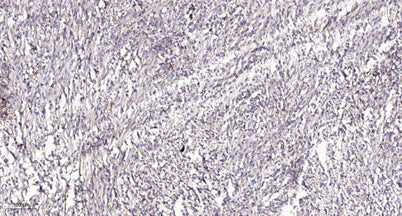
Applications: WB;ELISA;IHC
Reactivity: Human;Mouse;Rat
Source: Rabbit
Dilution: WB 1:500-2000;IHC-p 1:50-300; ELISA 2000-20000
Immunogen: The antiserum was produced against synthesized peptide derived from human PKD2 around the phosphorylation site of Ser812. AA range:778-827
Storage_stability: -20°C/1 year
Clonality: Polyclonal
Isotype: IgG
Concentration: 1 mg/ml
Human_gene_id: 5311
Human_swiss_prot_no: Q13563
Subcellular_location: Cell projection, cilium membrane ; Multi-pass membrane protein . Endoplasmic reticulum membrane ; Multi-pass membrane protein . Cell membrane ; Multi-pass membrane protein . Basolateral cell membrane . Cytoplasmic vesicle membrane . Golgi apparatus . PKD2 localization to the plasma and ciliary membranes requires PKD1. PKD1:PKD2 interaction is required to reach the Golgi apparatus form endoplasmic reticulum and then traffic to the cilia (By similarity). Retained in the endoplasmic reticulum by interaction with PACS1 and PACS2 (PubMed:15692563). Detected on kidney tubule basolateral membranes and basal cytoplasmic vesicles (PubMed:10770959). Cell surface and cilium localization requires GANAB (PubMed:27259053). .
Other_name: PKD2; Polycystin-2; Autosomal dominant polycystic kidney disease type II protein; Polycystic kidney disease 2 protein; Polycystwin; R48321
Background: polycystin 2, transient receptor potential cation channel(PKD2) Homo sapiens This gene encodes a member of the polycystin protein family. The encoded protein is a multi-pass membrane protein that functions as a calcium permeable cation channel, and is involved in calcium transport and calcium signaling in renal epithelial cells. This protein interacts with polycystin 1, and they may be partners in a common signaling cascade involved in tubular morphogenesis. Mutations in this gene are associated with autosomal dominant polycystic kidney disease type 2. [provided by RefSeq, Mar 2011],
Reactivity: Human;Mouse;Rat
Source: Rabbit
Dilution: WB 1:500-2000;IHC-p 1:50-300; ELISA 2000-20000
Immunogen: The antiserum was produced against synthesized peptide derived from human PKD2 around the phosphorylation site of Ser812. AA range:778-827
Storage_stability: -20°C/1 year
Clonality: Polyclonal
Isotype: IgG
Concentration: 1 mg/ml
Human_gene_id: 5311
Human_swiss_prot_no: Q13563
Subcellular_location: Cell projection, cilium membrane ; Multi-pass membrane protein . Endoplasmic reticulum membrane ; Multi-pass membrane protein . Cell membrane ; Multi-pass membrane protein . Basolateral cell membrane . Cytoplasmic vesicle membrane . Golgi apparatus . PKD2 localization to the plasma and ciliary membranes requires PKD1. PKD1:PKD2 interaction is required to reach the Golgi apparatus form endoplasmic reticulum and then traffic to the cilia (By similarity). Retained in the endoplasmic reticulum by interaction with PACS1 and PACS2 (PubMed:15692563). Detected on kidney tubule basolateral membranes and basal cytoplasmic vesicles (PubMed:10770959). Cell surface and cilium localization requires GANAB (PubMed:27259053). .
Other_name: PKD2; Polycystin-2; Autosomal dominant polycystic kidney disease type II protein; Polycystic kidney disease 2 protein; Polycystwin; R48321
Background: polycystin 2, transient receptor potential cation channel(PKD2) Homo sapiens This gene encodes a member of the polycystin protein family. The encoded protein is a multi-pass membrane protein that functions as a calcium permeable cation channel, and is involved in calcium transport and calcium signaling in renal epithelial cells. This protein interacts with polycystin 1, and they may be partners in a common signaling cascade involved in tubular morphogenesis. Mutations in this gene are associated with autosomal dominant polycystic kidney disease type 2. [provided by RefSeq, Mar 2011],
Share