1
/
of
1
ELK Biotechnology
SKU:ES6271
GCN2 rabbit pAb
GCN2 rabbit pAb
Regular price
$250.00 USD
Regular price
Sale price
$250.00 USD
Unit price
/
per
Shipping calculated at checkout.
Couldn't load pickup availability
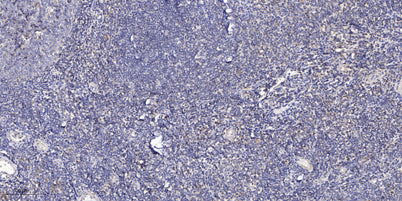
Applications: IHC;IF;ELISA
Reactivity: Human;Mouse
Source: Rabbit
Dilution: Immunohistochemistry: 1/100 - 1/300. ELISA: 1/20000. Not yet tested in other applications.
Immunogen: The antiserum was produced against synthesized peptide derived from human GCN2. AA range:865-914
Storage_stability: -20°C/1 year
Clonality: Polyclonal
Isotype: IgG
Concentration: 1 mg/ml
Human_gene_id: 440275
Human_swiss_prot_no: Q9P2K8
Subcellular_location: Cytoplasm .
Other_name: EIF2AK4; GCN2; KIAA1338; Eukaryotic translation initiation factor 2-alpha kinase 4; GCN2-like protein
Background: This gene encodes a member of a family of kinases that phosphorylate the alpha subunit of eukaryotic translation initiation factor-2 (EIF2), resulting in the downregulaton of protein synthesis. The encoded protein responds to amino acid deprivation by binding uncharged transfer RNAs. It may also be activated by glucose deprivation and viral infection. Mutations in this gene have been found in individuals suffering from autosomal recessive pulmonary venoocclusive-disease-2. [provided by RefSeq, Mar 2014],
Reactivity: Human;Mouse
Source: Rabbit
Dilution: Immunohistochemistry: 1/100 - 1/300. ELISA: 1/20000. Not yet tested in other applications.
Immunogen: The antiserum was produced against synthesized peptide derived from human GCN2. AA range:865-914
Storage_stability: -20°C/1 year
Clonality: Polyclonal
Isotype: IgG
Concentration: 1 mg/ml
Human_gene_id: 440275
Human_swiss_prot_no: Q9P2K8
Subcellular_location: Cytoplasm .
Other_name: EIF2AK4; GCN2; KIAA1338; Eukaryotic translation initiation factor 2-alpha kinase 4; GCN2-like protein
Background: This gene encodes a member of a family of kinases that phosphorylate the alpha subunit of eukaryotic translation initiation factor-2 (EIF2), resulting in the downregulaton of protein synthesis. The encoded protein responds to amino acid deprivation by binding uncharged transfer RNAs. It may also be activated by glucose deprivation and viral infection. Mutations in this gene have been found in individuals suffering from autosomal recessive pulmonary venoocclusive-disease-2. [provided by RefSeq, Mar 2014],
Share