1
/
of
1
ELK Biotechnology
SKU:ES6180
Tau (phospho Ser516/199) rabbit pAb
Tau (phospho Ser516/199) rabbit pAb
Regular price
$250.00 USD
Regular price
Sale price
$250.00 USD
Unit price
/
per
Shipping calculated at checkout.
Couldn't load pickup availability
Applications: WB;ELISA
Reactivity: Human;Mouse;Rat
Source: Rabbit
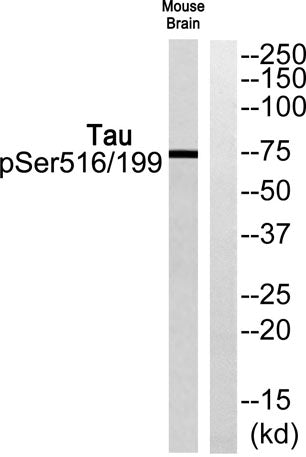
Dilution: Western Blot: 1/500 - 1/2000. ELISA: 1/40000. Not yet tested in other applications.
Immunogen: The antiserum was produced against synthesized peptide derived from human Tau around the phosphorylation site of Ser516 or 199. AA range:166-215
Storage_stability: -20°C/1 year
Clonality: Polyclonal
Isotype: IgG
Concentration: 1 mg/ml
Observed_band(KD): 50-85kD
Human_gene_id: 4137
Human_swiss_prot_no: P10636
Subcellular_location: Cytoplasm, cytosol . Cell membrane ; Peripheral membrane protein ; Cytoplasmic side . Cytoplasm, cytoskeleton . Cell projection, axon . Cell projection, dendrite . Secreted . Mostly found in the axons of neurons, in the cytosol and in association with plasma membrane components (PubMed:10747907). Can be secreted; the secretion is dependent on protein unfolding and facilitated by the cargo receptor TMED10; it results in protein translocation from the cytoplasm into the ERGIC (endoplasmic reticulum-Golgi intermediate compartment) followed by vesicle entry and secretion (PubMed:32272059). .
Other_name: MAPT; MAPTL; MTBT1; TAU; Microtubule-associated protein tau; Neurofibrillary tangle protein; Paired helical filament-tau; PHF-tau
Background: This gene encodes the microtubule-associated protein tau (MAPT) whose transcript undergoes complex, regulated alternative splicing, giving rise to several mRNA species. MAPT transcripts are differentially expressed in the nervous system, depending on stage of neuronal maturation and neuron type. MAPT gene mutations have been associated with several neurodegenerative disorders such as Alzheimer's disease, Pick's disease, frontotemporal dementia, cortico-basal degeneration and progressive supranuclear palsy. [provided by RefSeq, Jul 2008],
Reactivity: Human;Mouse;Rat
Source: Rabbit
Dilution: Western Blot: 1/500 - 1/2000. ELISA: 1/40000. Not yet tested in other applications.
Immunogen: The antiserum was produced against synthesized peptide derived from human Tau around the phosphorylation site of Ser516 or 199. AA range:166-215
Storage_stability: -20°C/1 year
Clonality: Polyclonal
Isotype: IgG
Concentration: 1 mg/ml
Observed_band(KD): 50-85kD
Human_gene_id: 4137
Human_swiss_prot_no: P10636
Subcellular_location: Cytoplasm, cytosol . Cell membrane ; Peripheral membrane protein ; Cytoplasmic side . Cytoplasm, cytoskeleton . Cell projection, axon . Cell projection, dendrite . Secreted . Mostly found in the axons of neurons, in the cytosol and in association with plasma membrane components (PubMed:10747907). Can be secreted; the secretion is dependent on protein unfolding and facilitated by the cargo receptor TMED10; it results in protein translocation from the cytoplasm into the ERGIC (endoplasmic reticulum-Golgi intermediate compartment) followed by vesicle entry and secretion (PubMed:32272059). .
Other_name: MAPT; MAPTL; MTBT1; TAU; Microtubule-associated protein tau; Neurofibrillary tangle protein; Paired helical filament-tau; PHF-tau
Background: This gene encodes the microtubule-associated protein tau (MAPT) whose transcript undergoes complex, regulated alternative splicing, giving rise to several mRNA species. MAPT transcripts are differentially expressed in the nervous system, depending on stage of neuronal maturation and neuron type. MAPT gene mutations have been associated with several neurodegenerative disorders such as Alzheimer's disease, Pick's disease, frontotemporal dementia, cortico-basal degeneration and progressive supranuclear palsy. [provided by RefSeq, Jul 2008],
Share