1
/
of
1
ELK Biotechnology
SKU:ES4617
AKAP 13 rabbit pAb
AKAP 13 rabbit pAb
Regular price
$250.00 USD
Regular price
Sale price
$250.00 USD
Unit price
/
per
Shipping calculated at checkout.
Couldn't load pickup availability
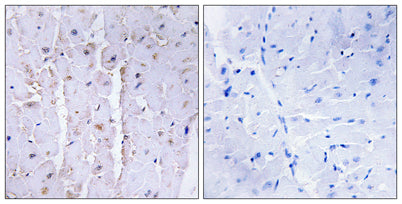
Applications: WB;IHC;IF;ELISA
Reactivity: Human;Rat;Mouse;
Source: Rabbit
Dilution: Western Blot: 1/500 - 1/2000. Immunohistochemistry: 1/100 - 1/300. ELISA: 1/20000. Not yet tested in other applications.
Immunogen: The antiserum was produced against synthesized peptide derived from human AKAP13. AA range:721-770
Storage_stability: -20°C/1 year
Clonality: Polyclonal
Isotype: IgG
Concentration: 1 mg/ml
Observed_band(KD): 307kD
Human_gene_id: 11214
Human_swiss_prot_no: Q12802
Subcellular_location: Cytoplasm, cytosol . Cytoplasm . Cytoplasm, cell cortex . Nucleus . Membrane ; Peripheral membrane protein . Colocalizes with the actin cytoskeleton at the cell cortex. .
Other_name: AKAP13; BRX; HT31; LBC; A-kinase anchor protein 13; AKAP-13; AKAP-Lbc; Breast cancer nuclear receptor-binding auxiliary protein; Guanine nucleotide exchange factor Lbc; Human thyroid-anchoring protein 31; Lymphoid blast crisis oncogene; LBC
Background: The A-kinase anchor proteins (AKAPs) are a group of structurally diverse proteins which have the common function of binding to the regulatory subunit of protein kinase A (PKA) and confining the holoenzyme to discrete locations within the cell. This gene encodes a member of the AKAP family. Alternative splicing of this gene results in multiple transcript variants encoding different isoforms containing c-terminal dbl oncogene homology (DH) and pleckstrin homology (PH) domains. The DH domain is associated with guanine nucleotide exchange activation for the Rho/Rac family of small GTP binding proteins, resulting in the conversion of the inactive GTPase to the active form capable of transducing signals. The PH domain has multiple functions. Therefore, these isoforms function as scaffolding proteins to coordinate a Rho signaling pathway, function as protein kinase A-anchoring proteins and, in addi
Reactivity: Human;Rat;Mouse;
Source: Rabbit
Dilution: Western Blot: 1/500 - 1/2000. Immunohistochemistry: 1/100 - 1/300. ELISA: 1/20000. Not yet tested in other applications.
Immunogen: The antiserum was produced against synthesized peptide derived from human AKAP13. AA range:721-770
Storage_stability: -20°C/1 year
Clonality: Polyclonal
Isotype: IgG
Concentration: 1 mg/ml
Observed_band(KD): 307kD
Human_gene_id: 11214
Human_swiss_prot_no: Q12802
Subcellular_location: Cytoplasm, cytosol . Cytoplasm . Cytoplasm, cell cortex . Nucleus . Membrane ; Peripheral membrane protein . Colocalizes with the actin cytoskeleton at the cell cortex. .
Other_name: AKAP13; BRX; HT31; LBC; A-kinase anchor protein 13; AKAP-13; AKAP-Lbc; Breast cancer nuclear receptor-binding auxiliary protein; Guanine nucleotide exchange factor Lbc; Human thyroid-anchoring protein 31; Lymphoid blast crisis oncogene; LBC
Background: The A-kinase anchor proteins (AKAPs) are a group of structurally diverse proteins which have the common function of binding to the regulatory subunit of protein kinase A (PKA) and confining the holoenzyme to discrete locations within the cell. This gene encodes a member of the AKAP family. Alternative splicing of this gene results in multiple transcript variants encoding different isoforms containing c-terminal dbl oncogene homology (DH) and pleckstrin homology (PH) domains. The DH domain is associated with guanine nucleotide exchange activation for the Rho/Rac family of small GTP binding proteins, resulting in the conversion of the inactive GTPase to the active form capable of transducing signals. The PH domain has multiple functions. Therefore, these isoforms function as scaffolding proteins to coordinate a Rho signaling pathway, function as protein kinase A-anchoring proteins and, in addi
Share