1
/
of
1
ELK Biotechnology
SKU:ES4218
STING/TMEM173 rabbit pAb
STING/TMEM173 rabbit pAb
Regular price
$250.00 USD
Regular price
Sale price
$250.00 USD
Unit price
/
per
Shipping calculated at checkout.
Couldn't load pickup availability
Applications: WB;IHC;IF;ELISA
Reactivity: Human;Mouse
Source: Rabbit
Dilution: Western Blot: 1/500 - 1/2000. IHC-p: 1/100-1/300. ELISA: 1/20000. Not yet tested in other applications.
Immunogen: Synthesized peptide derived from Transmembrane protein 173 at AA range: 301-350
Storage_stability: -20°C/1 year
Clonality: Polyclonal
Isotype: IgG
Concentration: 1 mg/ml
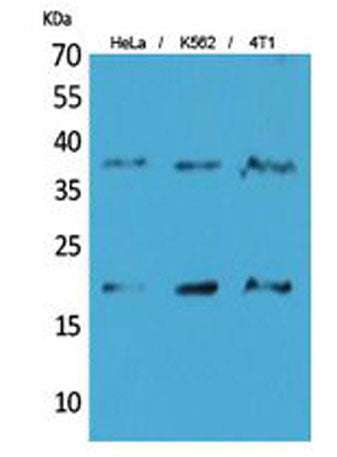
Observed_band(KD): 38kD
Human_gene_id: 340061
Human_swiss_prot_no: Q86WV6
Subcellular_location: Endoplasmic reticulum membrane ; Multi-pass membrane protein . Cytoplasm, perinuclear region . Endoplasmic reticulum-Golgi intermediate compartment membrane ; Multi-pass membrane protein . Golgi apparatus membrane ; Multi-pass membrane protein . Cytoplasmic vesicle, autophagosome membrane ; Multi-pass membrane protein . Mitochondrion outer membrane ; Multi-pass membrane protein . Cell membrane ; Multi-pass membrane protein . In response to double-stranded DNA stimulation, translocates from the endoplasmic reticulum through the endoplasmic reticulum-Golgi intermediate compartment and Golgi to post-Golgi vesicles, where the kinase TBK1 is recruited (PubMed:19433799, PubMed:30842659, PubMed:30842653, PubMed:29694889). Upon cGAMP-binding, translocates to the endoplasmic reticulum-Golgi interme
Other_name: TMEM173; ERIS; MITA; STING; Transmembrane protein 173; Endoplasmic reticulum interferon stimulator; ERIS; Mediator of IRF3 activation; hMITA; Stimulator of interferon genes protein; hSTING
Background: This gene encodes a five transmembrane protein that functions as a major regulator of the innate immune response to viral and bacterial infections. The encoded protein is a pattern recognition receptor that detects cytosolic nucleic acids and transmits signals that activate type I interferon responses. The encoded protein has also been shown to play a role in apoptotic signaling by associating with type II major histocompatibility complex. Mutations in this gene are the cause of infantile-onset STING-associated vasculopathy. Alternate splicing results in multiple transcript variants. [provided by RefSeq, Sep 2014],
Reactivity: Human;Mouse
Source: Rabbit
Dilution: Western Blot: 1/500 - 1/2000. IHC-p: 1/100-1/300. ELISA: 1/20000. Not yet tested in other applications.
Immunogen: Synthesized peptide derived from Transmembrane protein 173 at AA range: 301-350
Storage_stability: -20°C/1 year
Clonality: Polyclonal
Isotype: IgG
Concentration: 1 mg/ml
Observed_band(KD): 38kD
Human_gene_id: 340061
Human_swiss_prot_no: Q86WV6
Subcellular_location: Endoplasmic reticulum membrane ; Multi-pass membrane protein . Cytoplasm, perinuclear region . Endoplasmic reticulum-Golgi intermediate compartment membrane ; Multi-pass membrane protein . Golgi apparatus membrane ; Multi-pass membrane protein . Cytoplasmic vesicle, autophagosome membrane ; Multi-pass membrane protein . Mitochondrion outer membrane ; Multi-pass membrane protein . Cell membrane ; Multi-pass membrane protein . In response to double-stranded DNA stimulation, translocates from the endoplasmic reticulum through the endoplasmic reticulum-Golgi intermediate compartment and Golgi to post-Golgi vesicles, where the kinase TBK1 is recruited (PubMed:19433799, PubMed:30842659, PubMed:30842653, PubMed:29694889). Upon cGAMP-binding, translocates to the endoplasmic reticulum-Golgi interme
Other_name: TMEM173; ERIS; MITA; STING; Transmembrane protein 173; Endoplasmic reticulum interferon stimulator; ERIS; Mediator of IRF3 activation; hMITA; Stimulator of interferon genes protein; hSTING
Background: This gene encodes a five transmembrane protein that functions as a major regulator of the innate immune response to viral and bacterial infections. The encoded protein is a pattern recognition receptor that detects cytosolic nucleic acids and transmits signals that activate type I interferon responses. The encoded protein has also been shown to play a role in apoptotic signaling by associating with type II major histocompatibility complex. Mutations in this gene are the cause of infantile-onset STING-associated vasculopathy. Alternate splicing results in multiple transcript variants. [provided by RefSeq, Sep 2014],
Share