1
/
of
1
ELK Biotechnology
SKU:ES3373
Ribosomal Protein S3 rabbit pAb
Ribosomal Protein S3 rabbit pAb
Regular price
$250.00 USD
Regular price
Sale price
$250.00 USD
Unit price
/
per
Shipping calculated at checkout.
Couldn't load pickup availability
Applications: WB;IHC;IF;ELISA
Reactivity: Human;Mouse;Rat
Source: Rabbit
Dilution: Western Blot: 1/500 - 1/2000. Immunohistochemistry: 1/100 - 1/300. ELISA: 1/40000. Not yet tested in other applications.
Immunogen: The antiserum was produced against synthesized peptide derived from human RPS3. AA range:171-220
Storage_stability: -20°C/1 year
Clonality: Polyclonal
Isotype: IgG
Concentration: 1 mg/ml
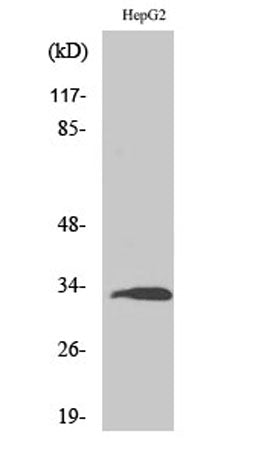
Observed_band(KD): 30kD
Human_gene_id: 6188
Human_swiss_prot_no: P23396
Subcellular_location: Cytoplasm . Nucleus . Nucleus, nucleolus . Mitochondrion inner membrane ; Peripheral membrane protein . Cytoplasm, cytoskeleton, spindle . In normal cells, located mainly in the cytoplasm with small amounts in the nucleus but translocates to the nucleus in cells undergoing apoptosis (By similarity). Nuclear translocation is induced by DNA damaging agents such as hydrogen peroxide (PubMed:17560175). Accumulates in the mitochondrion in response to increased ROS levels (PubMed:23911537). Localizes to the spindle during mitosis (PubMed:23131551). Localized in cytoplasmic mRNP granules containing untranslated mRNAs (PubMed:17289661). .
Other_name: RPS3; OK/SW-cl.26; 40S ribosomal protein S3
Background: Ribosomes, the organelles that catalyze protein synthesis, consist of a small 40S subunit and a large 60S subunit. Together these subunits are composed of 4 RNA species and approximately 80 structurally distinct proteins. This gene encodes a ribosomal protein that is a component of the 40S subunit, where it forms part of the domain where translation is initiated. The protein belongs to the S3P family of ribosomal proteins. Studies of the mouse and rat proteins have demonstrated that the protein has an extraribosomal role as an endonuclease involved in the repair of UV-induced DNA damage. The protein appears to be located in both the cytoplasm and nucleus but not in the nucleolus. Higher levels of expression of this gene in colon adenocarcinomas and adenomatous polyps compared to adjacent normal colonic mucosa have been observed. This gene is co-transcribed with the small nucleolar RNA genes U15A and
Reactivity: Human;Mouse;Rat
Source: Rabbit
Dilution: Western Blot: 1/500 - 1/2000. Immunohistochemistry: 1/100 - 1/300. ELISA: 1/40000. Not yet tested in other applications.
Immunogen: The antiserum was produced against synthesized peptide derived from human RPS3. AA range:171-220
Storage_stability: -20°C/1 year
Clonality: Polyclonal
Isotype: IgG
Concentration: 1 mg/ml
Observed_band(KD): 30kD
Human_gene_id: 6188
Human_swiss_prot_no: P23396
Subcellular_location: Cytoplasm . Nucleus . Nucleus, nucleolus . Mitochondrion inner membrane ; Peripheral membrane protein . Cytoplasm, cytoskeleton, spindle . In normal cells, located mainly in the cytoplasm with small amounts in the nucleus but translocates to the nucleus in cells undergoing apoptosis (By similarity). Nuclear translocation is induced by DNA damaging agents such as hydrogen peroxide (PubMed:17560175). Accumulates in the mitochondrion in response to increased ROS levels (PubMed:23911537). Localizes to the spindle during mitosis (PubMed:23131551). Localized in cytoplasmic mRNP granules containing untranslated mRNAs (PubMed:17289661). .
Other_name: RPS3; OK/SW-cl.26; 40S ribosomal protein S3
Background: Ribosomes, the organelles that catalyze protein synthesis, consist of a small 40S subunit and a large 60S subunit. Together these subunits are composed of 4 RNA species and approximately 80 structurally distinct proteins. This gene encodes a ribosomal protein that is a component of the 40S subunit, where it forms part of the domain where translation is initiated. The protein belongs to the S3P family of ribosomal proteins. Studies of the mouse and rat proteins have demonstrated that the protein has an extraribosomal role as an endonuclease involved in the repair of UV-induced DNA damage. The protein appears to be located in both the cytoplasm and nucleus but not in the nucleolus. Higher levels of expression of this gene in colon adenocarcinomas and adenomatous polyps compared to adjacent normal colonic mucosa have been observed. This gene is co-transcribed with the small nucleolar RNA genes U15A and
Share