1
/
of
1
ELK Biotechnology
SKU:ES20563
PEPC (Phospho Ser15) rabbit pAb
PEPC (Phospho Ser15) rabbit pAb
Regular price
$250.00 USD
Regular price
Sale price
$250.00 USD
Unit price
/
per
Shipping calculated at checkout.
Couldn't load pickup availability
Applications: WB; ELISA;IHC
Reactivity: Plants
Source: Rabbit
Dilution: WB 1:500-2000;IHC-p 1:50-300; ELISA 2000-20000
Immunogen: Synthetic Peptide of PEPC (Phospho Ser15)
Storage_stability: -20°C/1 year
Clonality: Polyclonal
Isotype: IgG
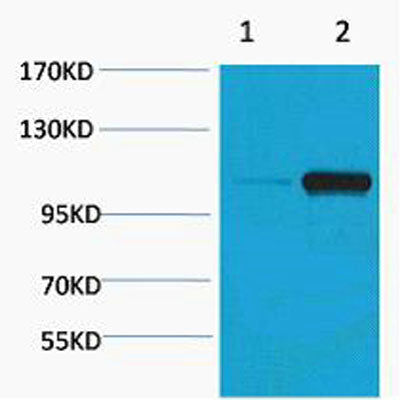
Observed_band(KD): 105-110kD
Human_gene_id: 5225
Human_swiss_prot_no: P20142
Subcellular_location: Secreted.
Other_name: PGC; Gastricsin; Pepsinogen C
Background: This gene encodes an aspartic proteinase that belongs to the peptidase family A1. The encoded protein is a digestive enzyme that is produced in the stomach and constitutes a major component of the gastric mucosa. This protein is also secreted into the serum. This protein is synthesized as an inactive zymogen that includes a highly basic prosegment. This enzyme is converted into its active mature form at low pH by sequential cleavage of the prosegment that is carried out by the enzyme itself. Polymorphisms in this gene are associated with susceptibility to gastric cancers. Serum levels of this enzyme are used as a biomarker for certain gastric diseases including Helicobacter pylori related gastritis. Alternate splicing results in multiple transcript variants. A pseudogene of this gene is found on chromosome 1. [provided by RefSeq, Oct 2009],
Reactivity: Plants
Source: Rabbit
Dilution: WB 1:500-2000;IHC-p 1:50-300; ELISA 2000-20000
Immunogen: Synthetic Peptide of PEPC (Phospho Ser15)
Storage_stability: -20°C/1 year
Clonality: Polyclonal
Isotype: IgG
Observed_band(KD): 105-110kD
Human_gene_id: 5225
Human_swiss_prot_no: P20142
Subcellular_location: Secreted.
Other_name: PGC; Gastricsin; Pepsinogen C
Background: This gene encodes an aspartic proteinase that belongs to the peptidase family A1. The encoded protein is a digestive enzyme that is produced in the stomach and constitutes a major component of the gastric mucosa. This protein is also secreted into the serum. This protein is synthesized as an inactive zymogen that includes a highly basic prosegment. This enzyme is converted into its active mature form at low pH by sequential cleavage of the prosegment that is carried out by the enzyme itself. Polymorphisms in this gene are associated with susceptibility to gastric cancers. Serum levels of this enzyme are used as a biomarker for certain gastric diseases including Helicobacter pylori related gastritis. Alternate splicing results in multiple transcript variants. A pseudogene of this gene is found on chromosome 1. [provided by RefSeq, Oct 2009],
Share