1
/
of
1
ELK Biotechnology
SKU:ES17973
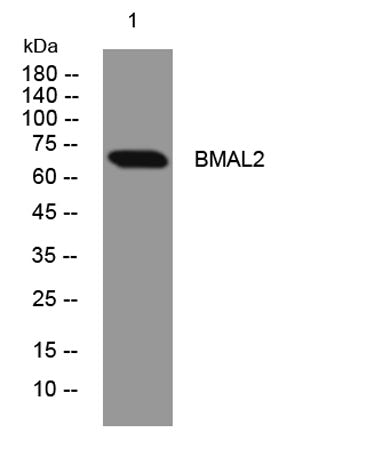
BMAL2 rabbit pAb
BMAL2 rabbit pAb
Regular price
$250.00 USD
Regular price
Sale price
$250.00 USD
Unit price
/
per
Shipping calculated at checkout.
Couldn't load pickup availability
Applications: WB
Reactivity: Human; Mouse
Source: Rabbit
Dilution: WB 1:500-2000
Immunogen: Synthesized peptide derived from human BMAL2 AA range: 495-545
Storage_stability: -20°C/1 year
Clonality: Polyclonal
Isotype: IgG
Concentration: 1 mg/ml
Human_gene_id: 56938
Human_swiss_prot_no: Q8WYA1
Subcellular_location: Nucleus .
Background: This gene encodes a basic helix-loop-helix transcription factor belonging to the PAS (PER, ARNT, SIM) superfamily. The PAS proteins play important roles in adaptation to low atmospheric and cellular oxygen levels, exposure to certain environmental pollutants, and diurnal oscillations in light and temperature. This protein forms a transcriptionally active heterodimer with the circadian CLOCK protein, the structurally related MOP4, and hypoxia-inducible factors, such as HIF1alpha. Consistent with its role as a biologically relevant partner of circadian and hypoxia factors, this protein is coexpressed in regions of the brain such as the thalamus, hypothalamus, and amygdala. Alternatively spliced transcript variants encoding different isoforms have been described for this gene. [provided by RefSeq, Oct 2011],
Reactivity: Human; Mouse
Source: Rabbit
Dilution: WB 1:500-2000
Immunogen: Synthesized peptide derived from human BMAL2 AA range: 495-545
Storage_stability: -20°C/1 year
Clonality: Polyclonal
Isotype: IgG
Concentration: 1 mg/ml
Human_gene_id: 56938
Human_swiss_prot_no: Q8WYA1
Subcellular_location: Nucleus .
Background: This gene encodes a basic helix-loop-helix transcription factor belonging to the PAS (PER, ARNT, SIM) superfamily. The PAS proteins play important roles in adaptation to low atmospheric and cellular oxygen levels, exposure to certain environmental pollutants, and diurnal oscillations in light and temperature. This protein forms a transcriptionally active heterodimer with the circadian CLOCK protein, the structurally related MOP4, and hypoxia-inducible factors, such as HIF1alpha. Consistent with its role as a biologically relevant partner of circadian and hypoxia factors, this protein is coexpressed in regions of the brain such as the thalamus, hypothalamus, and amygdala. Alternatively spliced transcript variants encoding different isoforms have been described for this gene. [provided by RefSeq, Oct 2011],
Share