1
/
of
1
ELK Biotechnology
SKU:ES17382
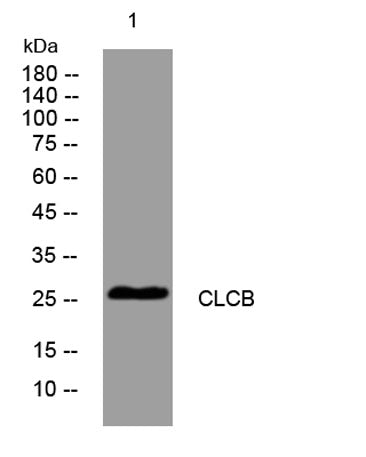
CLCB rabbit pAb
CLCB rabbit pAb
Regular price
$250.00 USD
Regular price
Sale price
$250.00 USD
Unit price
/
per
Shipping calculated at checkout.
Couldn't load pickup availability
Applications: WB
Reactivity: Human; Mouse;Rat
Source: Rabbit
Dilution: WB 1:500-2000
Immunogen: Synthesized peptide derived from human CLCB AA range: 168-218
Storage_stability: -20°C/1 year
Clonality: Polyclonal
Isotype: IgG
Concentration: 1 mg/ml
Human_gene_id: 1212
Human_swiss_prot_no: P09497
Subcellular_location: Cytoplasmic vesicle membrane; Peripheral membrane protein; Cytoplasmic side. Membrane, coated pit; Peripheral membrane protein; Cytoplasmic side. Cytoplasmic face of coated pits and vesicles.
Background: Clathrin is a large, soluble protein composed of heavy and light chains. It functions as the main structural component of the lattice-type cytoplasmic face of coated pits and vesicles which entrap specific macromolecules during receptor-mediated endocytosis. This gene encodes one of two clathrin light chain proteins which are believed to function as regulatory elements. Alternative splicing results in multiple transcript variants. [provided by RefSeq, Jul 2008],
Reactivity: Human; Mouse;Rat
Source: Rabbit
Dilution: WB 1:500-2000
Immunogen: Synthesized peptide derived from human CLCB AA range: 168-218
Storage_stability: -20°C/1 year
Clonality: Polyclonal
Isotype: IgG
Concentration: 1 mg/ml
Human_gene_id: 1212
Human_swiss_prot_no: P09497
Subcellular_location: Cytoplasmic vesicle membrane; Peripheral membrane protein; Cytoplasmic side. Membrane, coated pit; Peripheral membrane protein; Cytoplasmic side. Cytoplasmic face of coated pits and vesicles.
Background: Clathrin is a large, soluble protein composed of heavy and light chains. It functions as the main structural component of the lattice-type cytoplasmic face of coated pits and vesicles which entrap specific macromolecules during receptor-mediated endocytosis. This gene encodes one of two clathrin light chain proteins which are believed to function as regulatory elements. Alternative splicing results in multiple transcript variants. [provided by RefSeq, Jul 2008],
Share