1
/
of
1
ELK Biotechnology
SKU:ES13408
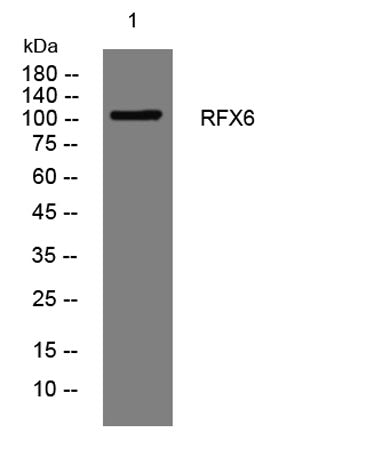
RFX6 rabbit pAb
RFX6 rabbit pAb
Regular price
$250.00 USD
Regular price
Sale price
$250.00 USD
Unit price
/
per
Shipping calculated at checkout.
Couldn't load pickup availability
Applications: WB;ELISA;IHC
Reactivity: Human; Mouse
Source: Rabbit
Dilution: WB 1:500-2000;IHC-p 1:50-300; ELISA 2000-20000
Immunogen: Synthesized peptide derived from human RFX6 AA range: 264-314
Storage_stability: -20°C/1 year
Clonality: Polyclonal
Isotype: IgG
Concentration: 1 mg/ml
Human_gene_id: 222546
Human_swiss_prot_no: Q8HWS3
Subcellular_location: Nucleus .
Background: The nuclear protein encoded by this gene is a member of the regulatory factor X (RFX) family of transcription factors. Studies in mice suggest that this gene is specifically required for the differentiation of islet cells for the production of insulin, but not for the differentiation of pancreatic polypeptide-producing cells. It regulates the transcription factors involved in beta-cell maturation and function, thus, restricting the expression of the beta-cell differentiation and specification genes. Mutations in this gene are associated with Mitchell-Riley syndrome, which is characterized by neonatal diabetes with pancreatic hypoplasia, duodenal and jejunal atresia, and gall bladder agenesis.[provided by RefSeq, Sep 2010],
Reactivity: Human; Mouse
Source: Rabbit
Dilution: WB 1:500-2000;IHC-p 1:50-300; ELISA 2000-20000
Immunogen: Synthesized peptide derived from human RFX6 AA range: 264-314
Storage_stability: -20°C/1 year
Clonality: Polyclonal
Isotype: IgG
Concentration: 1 mg/ml
Human_gene_id: 222546
Human_swiss_prot_no: Q8HWS3
Subcellular_location: Nucleus .
Background: The nuclear protein encoded by this gene is a member of the regulatory factor X (RFX) family of transcription factors. Studies in mice suggest that this gene is specifically required for the differentiation of islet cells for the production of insulin, but not for the differentiation of pancreatic polypeptide-producing cells. It regulates the transcription factors involved in beta-cell maturation and function, thus, restricting the expression of the beta-cell differentiation and specification genes. Mutations in this gene are associated with Mitchell-Riley syndrome, which is characterized by neonatal diabetes with pancreatic hypoplasia, duodenal and jejunal atresia, and gall bladder agenesis.[provided by RefSeq, Sep 2010],
Share