1
/
of
1
ELK Biotechnology
SKU:ES13138
SG1D1 rabbit pAb
SG1D1 rabbit pAb
Regular price
$250.00 USD
Regular price
Sale price
$250.00 USD
Unit price
/
per
Shipping calculated at checkout.
Couldn't load pickup availability
Applications: IHC;IF
Reactivity: Human;Rat;Mouse;
Source: Rabbit
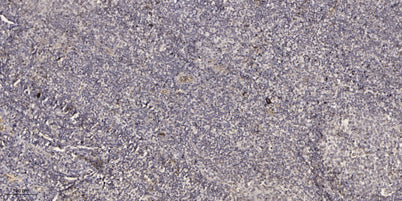
Dilution: IHC-p 1:50-200
Immunogen: Synthesized peptide derived from human SG1D1 AA range: 18-68
Storage_stability: -20°C/1 year
Clonality: Polyclonal
Isotype: IgG
Concentration: 1 mg/ml
Human_gene_id: 10648
Human_swiss_prot_no: O95968
Subcellular_location: Secreted .
Background: The protein encoded by this gene is a member of the lipophilin subfamily, part of the uteroglobin superfamily, and is an ortholog of prostatein, the major secretory glycoprotein of the rat ventral prostate gland. This gene product represents one component of a heterodimeric molecule present in human tears whose elution profile is consistent with prostatein, a tetrameric molecule composed of three peptide components in heterodimers. Assuming that human lipophilins are the functional counterparts of prostatein, they may be transcriptionally regulated by steroid hormones, with the ability to bind androgens, other steroids and possibly bind and concentrate estramustine, a chemotherapeutic agent widely used for prostate cancer. Although the gene has been reported to be on chromosome 15, this sequence appears to be from a cluster of genes on chromosome 11 that includes mammaglobin 2. [provided by RefSeq, Jul 2008],
Reactivity: Human;Rat;Mouse;
Source: Rabbit
Dilution: IHC-p 1:50-200
Immunogen: Synthesized peptide derived from human SG1D1 AA range: 18-68
Storage_stability: -20°C/1 year
Clonality: Polyclonal
Isotype: IgG
Concentration: 1 mg/ml
Human_gene_id: 10648
Human_swiss_prot_no: O95968
Subcellular_location: Secreted .
Background: The protein encoded by this gene is a member of the lipophilin subfamily, part of the uteroglobin superfamily, and is an ortholog of prostatein, the major secretory glycoprotein of the rat ventral prostate gland. This gene product represents one component of a heterodimeric molecule present in human tears whose elution profile is consistent with prostatein, a tetrameric molecule composed of three peptide components in heterodimers. Assuming that human lipophilins are the functional counterparts of prostatein, they may be transcriptionally regulated by steroid hormones, with the ability to bind androgens, other steroids and possibly bind and concentrate estramustine, a chemotherapeutic agent widely used for prostate cancer. Although the gene has been reported to be on chromosome 15, this sequence appears to be from a cluster of genes on chromosome 11 that includes mammaglobin 2. [provided by RefSeq, Jul 2008],
Share