1
/
of
1
ELK Biotechnology
SKU:ES12602
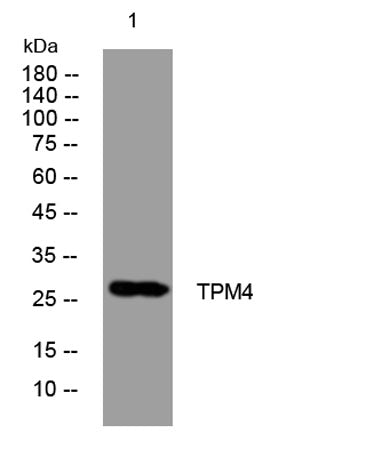
TPM4 rabbit pAb
TPM4 rabbit pAb
Regular price
$250.00 USD
Regular price
Sale price
$250.00 USD
Unit price
/
per
Shipping calculated at checkout.
Couldn't load pickup availability
Applications: WB
Reactivity: Human; Mouse;Rat
Source: Rabbit
Dilution: WB 1:500-2000
Immunogen: Synthesized peptide derived from human TPM4 AA range: 127-177
Storage_stability: -20°C/1 year
Clonality: Polyclonal
Isotype: IgG
Concentration: 1 mg/ml
Human_gene_id: 7171
Human_swiss_prot_no: P67936
Subcellular_location: Cytoplasm, cytoskeleton . Associates with F-actin stress fibers. .
Background: This gene encodes a member of the tropomyosin family of actin-binding proteins involved in the contractile system of striated and smooth muscles and the cytoskeleton of non-muscle cells. Tropomyosins are dimers of coiled-coil proteins that polymerize end-to-end along the major groove in most actin filaments. They provide stability to the filaments and regulate access of other actin-binding proteins. In muscle cells, they regulate muscle contraction by controlling the binding of myosin heads to the actin filament. Multiple transcript variants encoding different isoforms have been found for this gene. [provided by RefSeq, Nov 2009],
Reactivity: Human; Mouse;Rat
Source: Rabbit
Dilution: WB 1:500-2000
Immunogen: Synthesized peptide derived from human TPM4 AA range: 127-177
Storage_stability: -20°C/1 year
Clonality: Polyclonal
Isotype: IgG
Concentration: 1 mg/ml
Human_gene_id: 7171
Human_swiss_prot_no: P67936
Subcellular_location: Cytoplasm, cytoskeleton . Associates with F-actin stress fibers. .
Background: This gene encodes a member of the tropomyosin family of actin-binding proteins involved in the contractile system of striated and smooth muscles and the cytoskeleton of non-muscle cells. Tropomyosins are dimers of coiled-coil proteins that polymerize end-to-end along the major groove in most actin filaments. They provide stability to the filaments and regulate access of other actin-binding proteins. In muscle cells, they regulate muscle contraction by controlling the binding of myosin heads to the actin filament. Multiple transcript variants encoding different isoforms have been found for this gene. [provided by RefSeq, Nov 2009],
Share